Author: digikore

  • How to Make Your Small Brand Instagrammable and Relatable: A Practical FAQ Guide for Modern Businesses

    How to Make Your Small Brand Instagrammable and Relatable: A Practical FAQ Guide for Modern Businesses

    In a crowded digital landscape, simply posting product photos is no longer enough. Consumers today connect with brands that feel authentic, recognizable, and easy to engage with. Whether you’re a startup, local business, manufacturer, or growing enterprise, making your brand Instagrammable and relatable can significantly improve visibility, engagement, and customer trust.

    This guide answers the most common questions businesses ask about creating a brand people genuinely want to follow, interact with, and remember.

    What Does It Mean for a Brand to Be Instagrammable?

    An Instagrammable brand creates visually appealing, shareable, and engaging content that encourages people to interact with it online.

    However, being Instagrammable isn’t just about aesthetics. Modern consumers are looking for:

    • Authenticity
    • Consistency
    • Storytelling
    • Community engagement
    • Memorable brand experiences

    The brands that succeed on Instagram are often the ones that feel human rather than corporate.

    Why Is Relatability Important for Small Brands?

    Relatability helps build trust.

    Large corporations may have massive advertising budgets, but small brands have a unique advantage: they can create genuine connections with their audience.

    When customers see real people, real stories, and real experiences behind a business, they are more likely to:

    • Follow the brand
    • Engage with content
    • Recommend it to others
    • Become repeat customers

    People buy from brands they trust, and trust comes from familiarity.

    How Can a Small Brand Become More Instagrammable?

    1. Develop a Consistent Visual Identity

    Consistency makes your brand recognizable.

    Focus on:

    • Brand colors
    • Typography
    • Design templates
    • Photography style

    When someone scrolls through their feed, they should be able to identify your content instantly.

    A consistent visual identity creates professionalism and strengthens brand recall.

    2. Show the Human Side of Your Business

    Customers want to know who’s behind the brand.

    Share:

    • Team introductions
    • Behind-the-scenes videos
    • Workspace tours
    • Founder stories
    • Daily operations

    This type of content often generates more engagement than polished promotional posts because it feels authentic.

    small brand

    3. Create Content That Educates

    One of the biggest mistakes small brands make is posting only sales-driven content.

    Instead, answer questions your audience is already asking.

    Examples include:

    • Industry tips
    • Product guides
    • Common mistakes to avoid
    • How-to tutorials
    • Frequently asked questions

    Educational content positions your brand as a trusted resource rather than just another seller.

    What Type of Content Performs Best on Instagram?

    The most successful brands typically use a combination of:

    Reels

    Short-form videos remain one of the highest-performing content formats.

    Use Reels for:

    • Product demonstrations
    • Before-and-after transformations
    • Behind-the-scenes moments
    • Quick tips

    Stories

    Stories create daily touchpoints with your audience.

    Use:

    • Polls
    • Quizzes
    • Question stickers
    • Product previews

    User-Generated Content

    Featuring customer photos, videos, and testimonials builds credibility while encouraging community participation.

    How Important Is Storytelling for Brand Growth?

    Storytelling is one of the most powerful marketing tools available.

    Rather than simply explaining what your product does, explain:

    • Why your brand exists
    • What problem you solve
    • How customers benefit
    • What values drive your business

    Stories help audiences remember your brand long after they’ve forgotten a sales message.

    How Can Small Brands Improve Brand Recall?

    Many businesses focus entirely on visual branding but overlook an equally powerful element: sound.

    This is where audio branding becomes a major competitive advantage.

    What Is Audio Branding?

    Audio branding refers to the strategic use of sound to create a unique and memorable brand identity.

    Examples include:

    • Brand jingles
    • Sonic logos
    • Signature sounds
    • Audio signatures used in advertisements and videos

    Think about some of the world’s most recognizable brands. Many can be identified within seconds simply through a sound or melody.

    The same principle applies to small businesses.

    Why Should Small Brands Invest in a Brand Jingle?

    A brand jingle creates instant recognition.

    Benefits include:

    Better Brand Recall

    People remember sounds faster and longer than visual messages alone.

    Stronger Emotional Connection

    Music creates emotions that help customers connect with your brand.

    Consistent Identity Across Platforms

    A custom jingle can be used on:

    • Instagram Reels
    • YouTube videos
    • Advertisements
    • Podcasts
    • Events
    • Radio campaigns

    Competitive Differentiation

    Most small businesses focus only on logos and visuals. A professional brand jingle helps your business stand out in a crowded market.

    How Can a Brand Get a Professional Custom Jingle?

    The most effective approach is to work with specialists who understand both branding and audio production.

    At Digikore Studios, businesses can create customized audio branding solutions designed specifically for their brand personality and target audience.

    Services can include:

    • Custom brand jingles
    • Sonic branding
    • Audio logos
    • Advertising music
    • Corporate audio identity solutions

    Instead of using generic music tracks, a tailored audio identity gives your brand a distinctive voice that customers can instantly recognize.

    In an era where content is consumed across Instagram, YouTube, podcasts, and digital advertising, audio branding is becoming just as important as visual branding.

    How Can Brands Create Content That Works for AI Search and Discovery?

    With platforms like Google AI Overviews, Gemini, ChatGPT, and other AI-powered search systems increasingly influencing how users discover information, brands should focus on answer-based content.

    Best practices include:

    Answer Questions Directly

    Structure content around real customer questions.

    Use Clear Headings

    FAQ-style formatting helps both users and AI systems understand content quickly.

    Demonstrate Expertise

    Provide practical insights rather than vague marketing claims.

    Create Original Content

    Unique experiences, case studies, and authentic perspectives are more valuable than generic information.

    Build Brand Authority

    Consistently publish useful, trustworthy content within your industry.

    Final Thoughts

    Making your small brand Instagrammable and relatable isn’t about chasing every trend. It’s about creating a memorable brand experience that people recognize, trust, and enjoy engaging with.

    Focus on strong visual branding, authentic storytelling, educational content, and meaningful customer interactions. At the same time, don’t overlook the power of audio branding. A custom brand jingle can dramatically improve recognition, recall, and emotional connection across every platform where your audience encounters your business.

    As digital discovery evolves through Instagram, Google, Gemini, ChatGPT, and AI-powered search experiences, brands that communicate clearly, answer questions effectively, and create memorable multi-sensory experiences will have a significant advantage.

    And for businesses looking to establish a distinctive audio identity, Digikore Studios’ customized audio branding and brand jingle solutions can help transform a brand from being seen to being remembered.

  • Struggling to Get Your Brand Noticed on Instagram? Here Are 6 Ways to Increase Visibility

    Struggling to Get Your Brand Noticed on Instagram? Here Are 6 Ways to Increase Visibility

    You open Instagram and see brands in your industry getting thousands of views, shares, and comments.

    Some of their content looks simple. Sometimes it even looks less polished than yours.

    Yet people remember them.

    Meanwhile, you’ve been posting consistently, trying different content formats, experimenting with hashtags, and following marketing advice from countless sources. But your visibility isn’t growing the way you expected.

    If this sounds familiar, you’re not alone.

    One of the most common questions business owners ask today is:

    “How do I make my brand stand out on Instagram?”

    The answer is not posting more content.

    The answer is becoming more memorable.

    Instagram is crowded. Every day, users are exposed to hundreds of posts, videos, advertisements, and stories. Most of that content is forgotten within minutes. The brands that succeed are not necessarily the ones posting the most. They are the ones people remember after they stop scrolling.

    At Digikore Studios, we work with brands that want to build stronger connections with their audiences. Over the years, we’ve noticed something interesting: brands often focus on visibility, when they should be focusing on memorability.

    Visibility follows memorability.

    Let’s look at what actually helps.

    What Makes a Brand Visible on Instagram?

    Before discussing tactics, it’s important to understand how visibility works.

    Instagram’s algorithm may decide who sees your content first, but people decide whether they remember it.

    A visible brand usually has three things:

    • A clear identity
    • Consistent content
    • Something distinctive that separates it from competitors

    The problem is that most brands only focus on the first two.

    They forget the third.

    That’s why many businesses look professional but still blend into the background.

    1. Create Content That Solves Real Problems

    Think about your own behavior on Instagram.

    What makes you stop scrolling?

    Usually, it’s content that teaches you something, answers a question, or helps solve a problem.

    The same principle applies to your audience.

    Instead of creating content about your business all the time, create content that helps people understand something better.

    For example:

    • Answer common customer questions
    • Share industry insights
    • Explain trends
    • Demonstrate solutions
    • Break down complex topics into simple explanations

    When your content becomes useful, people start saving and sharing it.

    Those actions signal value to Instagram and help increase your reach organically.

    2. Build a Consistent Brand Identity

    Many businesses unknowingly make themselves forgettable.

    One week, their content looks corporate.

    The next week, it looks playful.

    The colors change. The messaging changes. The overall experience feels different every time.

    Recognition happens through repetition.

    The brands people remember usually have consistency across:

    • Visual design
    • Messaging
    • Tone of voice
    • Content style
    • Brand personality

    The goal isn’t to make every post look identical.

    The goal is to make every post feel like it belongs to the same brand.

    Brand Jingle

    3. Use Video to Increase Reach and Engagement

    Video continues to dominate Instagram because it keeps users engaged for longer periods.

    This is why Reels remain one of the strongest tools for brand discovery.

    You don’t need expensive equipment or large production budgets.

    What matters is relevance.

    Create videos that:

    • Explain your products
    • Answer customer questions
    • Share customer success stories
    • Show behind-the-scenes processes
    • Demonstrate expertise

    The more time people spend engaging with your content, the stronger your brand familiarity becomes.

    And familiarity is often the first step toward trust.

    4. Give Your Brand a Sound People Can Remember

    This is where many businesses miss a major opportunity.

    Most brands invest heavily in how they look.

    Very few invest in how they sound.

    Yet sound is one of the strongest memory triggers available in marketing.

    Think about some of the most recognizable brands in the world. Many have a distinctive audio identity that people can recognize within seconds.

    This is called sonic branding.

    One of the most effective forms of sonic branding is a brand jingle.

    What Is a Brand Jingle?

    A brand jingle is a short, memorable piece of music created specifically for a business, product, or campaign.

    Businesses use brand jingles across:

    • Instagram Reels
    • Social media advertisements
    • YouTube videos
    • Television commercials
    • Radio campaigns
    • Product launches
    • Brand promotions

    The purpose is simple.

    When people repeatedly hear the same sound, they begin associating it with your brand.

    Over time, that sound becomes part of your identity.

    Why Do Brand Jingles Work?

    People often remember sounds longer than they remember visual details.

    A recognizable jingle can help:

    • Improve brand recall
    • Increase ad memorability
    • Strengthen emotional connections
    • Differentiate your business from competitors
    • Create consistency across marketing channels

    This is why businesses continue investing in advertising jingles, audio branding, and sonic logos, even as marketing channels evolve.

    At Digikore Studios, we help brands create custom audio identities that work across modern digital platforms. Whether you’re looking for a brand jingle, a jingle for ads, or a complete sonic branding solution, the goal remains the same: helping people remember your brand long after they’ve seen your content.

    Because visibility starts with recognition.

    And recognition starts with memory.

    5. Partner With People Your Audience Already Trusts

    Building visibility from scratch can be slow.

    One of the fastest ways to reach new audiences is through strategic collaborations.

    This doesn’t always mean working with celebrity influencers.

    In many cases, smaller creators have stronger relationships with their audiences.

    Look for partnerships that align with:

    • Your industry
    • Your values
    • Your target audience
    • Your business goals

    When the partnership feels authentic, people are more likely to engage with your brand.

    6. Create a Brand Experience Beyond Instagram

    Instagram is important.

    But your customers don’t live on Instagram alone.

    They move between Google, YouTube, websites, podcasts, email newsletters, and other digital platforms every day.

    The brands that remain memorable create a consistent experience wherever customers encounter them.

    That includes:

    • Visual identity
    • Messaging
    • Content style
    • Customer experience
    • Audio identity

    A strong brand jingle can support this consistency because it works across multiple channels, not just Instagram.

    The more familiar your brand feels across touchpoints, the easier it becomes for people to remember you.

    The Real Goal Isn’t Visibility. It’s Memorability.

    Many businesses spend years chasing reach.

    But reach without recognition rarely creates lasting results.

    The brands that grow consistently are the ones people remember.

    That’s why the most effective Instagram strategies combine valuable content, consistent branding, strong storytelling, and distinctive brand assets.

    One of those assets is sound.

    A memorable brand jingle can help your business stand out in a crowded market, improve recall, and create stronger connections with your audience.

    At Digikore Studios, we specialize in creating custom brand jingles, advertising jingles, and sonic branding solutions that help businesses build recognition across Instagram, digital advertising, and other marketing channels.

    Because in a world where everyone is competing for attention, being remembered matters more than being seen.

    Frequently Asked Questions

    What is a brand jingle?

    A brand jingle is a short, custom-made piece of music created to represent a business, product, or service. It is used to improve brand recognition and recall across advertising and marketing channels.

    How does a brand jingle help with Instagram marketing?

    A brand jingle creates consistency across your video content. When audiences repeatedly hear the same sound, they begin associating it with your brand, making your content easier to recognize and remember.

    What is the difference between a brand jingle and a sonic logo?

    A sonic logo is usually a very short audio signature lasting a few seconds. A brand jingle is typically longer and may include music, lyrics, or a complete melodic theme associated with the brand.

    Are advertising jingles still effective today?

    Yes. Advertising jingles continue to be used because sound plays a powerful role in memory and emotional connection. A memorable jingle can significantly improve brand recall.

    Can small businesses benefit from brand jingles?

    Absolutely. A custom brand jingle can help small businesses create a distinctive identity and compete more effectively in crowded digital markets.

    Why is sonic branding becoming more important?

    As video, audio, and digital content continue to grow, brands need ways to be recognized beyond visual elements. Sonic branding helps create a unique and memorable audio identity.

    Why choose Digikore Studios for brand jingles?

    Digikore Studios specializes in creating custom brand jingles, advertising jingles, sonic logos, and audio branding solutions designed to help businesses improve recognition, recall, and audience engagement across digital platforms.

  • Boost Brand Recall and Visibility With a Custom Brand Jingle

    Boost Brand Recall and Visibility With a Custom Brand Jingle

    Every brand wants to be remembered. But in today’s fast-moving digital world, getting attention is easy; staying in people’s minds is the real challenge.

    Consumers scroll through hundreds of ads, videos, and posts every single day. Most of them are forgotten within seconds. What makes certain brands instantly recognizable is not just their logo or visuals, but their sound.

    Think about the brands you can recognize just by hearing a tune, a short melody, or a tagline with music. That’s the power of a brand jingle.

    At Digikore Studios, custom brand jingles are created to help brands sound unique, memorable, and emotionally connected to their audience.

    What Is a Brand Jingle?

    A brand jingle is a short piece of music created specially for a business or campaign. It can include music, lyrics, vocals, or even a simple sound that people start associating with a brand.

    A good jingle is:

    • Easy to remember
    • Catchy without being annoying
    • Aligned with the brand’s personality
    • Flexible enough to use across platforms

    Unlike stock music, a custom jingle belongs only to your brand. It becomes part of your identity.

    Why Brand Recall Matters Today

    People are exposed to endless content every day, from Instagram Reels and YouTube ads to podcasts and OTT platforms. Because of this, brands have only a few seconds to make an impression.

    Visuals help grab attention, but sound helps people remember.

    Music creates emotional connections much faster than text or images. When people repeatedly hear the same sound or melody connected to a brand, it stays in their memory.

    That’s why audio branding is becoming a major part of modern marketing.

    A strong brand jingle can help:

    • Increase brand recognition
    • Improve ad recall
    • Build emotional connection
    • Make content more engaging
    • Create consistency across campaigns

    Why Audio Branding Is Growing Fast

    Digital content is changing quickly. Today, people consume content while multitasking, driving, working, exercising, or scrolling rapidly through short videos.

    Audio plays a bigger role than ever because people often remember how content sounds even when they don’t remember what they saw.

    Platforms like:

    • Instagram Reels
    • YouTube Shorts
    • TikTok
    • Spotify
    • Podcasts
    • OTT ads

    all depend heavily on sound-driven engagement.

    This is why brands are now investing in custom audio branding instead of using random background music.

    A recognizable sound helps your audience identify your brand instantly, even before they see your logo.

    How a Custom Brand Jingle Helps Your Business

    1. Makes Your Brand Easy to Remember

    A catchy and well-produced jingle creates familiarity. The more people hear it, the more they connect it with your business.

    Over time, even a short sound can instantly remind people of your brand.

    This is especially useful for:

    • Social media campaigns
    • Video ads
    • Radio promotions
    • Corporate videos
    • Product launches
    • Event branding

    Consistency builds recognition.

    2. Creates an Emotional Connection

    Music influences emotions naturally.

    A brand jingle can make your business feel:

    • Energetic
    • Premium
    • Friendly
    • Trustworthy
    • Modern
    • Fun

    The style of music changes how people feel about your brand.

    For example:

    • A luxury brand may use elegant, soft music
    • A youth-focused brand may use upbeat and energetic sounds
    • A tech company may prefer futuristic audio styles

    The right jingle helps communicate your brand personality without saying too much.

    3. Improves Social Media Content

    Short-form content performs better when the audio is engaging.

    A custom jingle gives your content consistency across different videos and campaigns. It helps people instantly recognize your content while scrolling.

    This can help improve:

    • Watch time
    • Engagement
    • Shares
    • Audience recall

    Instead of sounding like every other brand online, your content develops its own identity.

    Custom Brand Jingles

    4. Gives Your Brand a Professional Identity

    Using generic music can make marketing feel repetitive or forgettable.

    A custom jingle gives your brand:

    • Originality
    • A stronger identity
    • Better audience connection
    • Long-term branding value

    It becomes an asset that can be used across all your marketing platforms for years.

    What Makes a Good Brand Jingle?

    Not every catchy tune works as branding. A successful jingle needs the right balance of creativity and strategy.

    A good brand jingle should be:

    • Simple and memorable
    • Easy to recognize
    • Relevant to the brand
    • Short and impactful
    • Flexible for different campaigns

    The goal is not just to create music, it’s to create a sound people associate with your business.

    Why Brands Choose Digikore Studios

    At Digikore Studios, brand jingles are designed with both creativity and marketing impact in mind.

    The focus is on creating audio that:

    • Matches the brand identity
    • Connects emotionally with audiences
    • Works across digital platforms
    • Sounds professional and modern
    • Helps improve long-term brand recall

    Whether it’s for a startup, a product launch, a social media campaign, or a corporate brand film, the idea is simple: create a sound people remember.

    Final Thoughts

    In a world full of content, being seen is not enough anymore. Brands also need to be heard,  and remembered.

    A custom brand jingle helps businesses create a stronger identity, improve audience recall, and stand out in crowded digital spaces.

    As video content, voice platforms, and AI-driven experiences continue to grow, audio branding will become even more important for businesses looking to build long-term visibility.

    A memorable sound can often do what visuals alone cannot, stay in people’s minds long after the content ends.

    FAQs

    What is a custom brand jingle?

    A custom brand jingle is a short piece of music or audio created specifically for a business to improve brand recognition and recall.

    Why is a brand jingle important?

    A brand jingle helps people remember your business more easily and creates a stronger emotional connection with your audience.

    Can small businesses use brand jingles?

    Yes. Custom jingles are useful for businesses of all sizes and can improve social media marketing, advertisements, and brand identity.

    Where can a brand jingle be used?

    Brand jingles can be used in ads, social media videos, YouTube content, podcasts, radio campaigns, events, and corporate films.

    How long should a brand jingle be?

    Most brand jingles are short and memorable, usually between a few seconds and 30 seconds.

    Why choose Digikore Studios for custom brand jingles?

    Digikore Studios creates professionally produced brand jingles that are designed to improve brand recall, audience engagement, and digital marketing performance.

  • Key Factors to Consider Before Hiring a Jingle Production Agency

    Key Factors to Consider Before Hiring a Jingle Production Agency

    Most people don’t remember ads. They remember how an ad felt.

    Sometimes it’s a line. Sometimes it’s a voice. But very often, it’s the sound.

    A good jingle stays in people’s minds long after the ad ends. You hear it once while driving, scrolling Instagram, watching YouTube, or sitting in a café, and suddenly the brand becomes familiar. That is the real power of audio branding.

    But creating a memorable jingle is harder than most businesses think.

    Many companies hire a production agency expecting “catchy music,” only to receive something generic that sounds like every other commercial online. The result? No emotional connection, no brand recall, and no marketing impact.

    A commercial jingle is not just music. It is a branding tool. And the agency you hire directly affects how your audience remembers your business.

    If you are planning to invest in a jingle for radio, TV, YouTube, social media, or digital campaigns, here are the most important factors you should evaluate before hiring a jingle production agency.

    Why Jingles Still Work in Modern Marketing

    There is a reason major brands still invest heavily in sonic branding.

    Humans remember sound faster than visuals. A strong melody creates familiarity almost instantly. Even short audio cues can trigger memory and recognition.

    Think about how quickly people recognize:

    • Netflix’s opening sound
    • McDonald’s “I’m Lovin’ It”
    • Intel’s sonic logo
    • Spotify notification tones

    That is not accidental. It is strategic audio branding.

    Today, jingles are no longer limited to old-fashioned radio ads. Businesses now use them across:

    • YouTube commercials
    • Instagram reels
    • TikTok ads
    • Podcasts
    • OTT platforms
    • Retail spaces
    • Mobile apps
    • Brand videos

    The platforms have changed, but the psychology has not. People still connect emotionally through sound.

    1. Make Sure They Understand Branding — Not Just Music

    This is the biggest mistake businesses make.

    A talented music producer is not automatically a good jingle producer.

    There is a difference between creating a great song and creating audio that supports a brand identity.

    A commercial jingle has a job to do:

    • attract attention,
    • communicate emotion,
    • support the message,
    • and improve recall.

    If an agency talks only about instruments, beats, or studio equipment but never discusses your audience or brand personality, that is a problem.

    A serious jingle agency will ask questions like:

    • Who is your target audience?
    • Where will the jingle be used?
    • What feeling should people associate with your brand?
    • Are you trying to sound premium, youthful, trustworthy, energetic, or emotional?

    Those conversations matter more than fancy equipment.

    Because in advertising, strategy comes before sound.

    2. Look at Their Previous Work Carefully

    Most agencies have a portfolio. But many businesses review it the wrong way.

    Do not ask:

    “Do I personally like this music?”

    Instead ask:

    • Does this fit the brand it was made for?
    • Is the hook memorable?
    • Does the audio feel polished?
    • Can I remember anything after hearing it once?
    • Does it sound emotionally aligned with the product?

    A good portfolio shows versatility.

    One project may sound energetic for a food brand, while another may feel calm and elegant for a luxury company. That adaptability is important because every brand needs a different sonic identity.

    If every sample sounds the same, the agency may rely too heavily on formulas.

    3. Originality Matters More Than Ever

    Audiences consume an enormous amount of content every day.

    Thousands of ads.
    Hundreds of videos.
    Constant background noise.

    If your jingle sounds generic, people will forget it immediately.

    Unfortunately, some low-cost agencies reuse templates, stock melodies, or recycled compositions. The music may sound “professional,” but it lacks identity.

    A good jingle should sound like it belongs to your brand and nobody else’s.

    That does not mean it needs to be overly complex. In fact, the best jingles are often very simple.

    But simple and generic are not the same thing.

    Strong agencies focus on:

    • unique hooks,
    • custom lyrics,
    • brand-focused storytelling,
    • and emotional tone.

    Originality is what makes people remember.

    Jingle Production Agency

    4. Audio Quality Directly Affects Brand Perception

    People judge brands faster than businesses realize.

    Poor audio quality immediately makes a company feel less credible.

    Even if customers do not consciously analyze the production, they notice when something sounds cheap, distorted, or outdated.

    Professional jingle production should include:

    • high-quality recording,
    • clean vocal production,
    • proper sound mixing,
    • mastering,
    • and optimization for multiple platforms.

    This matters because your audience may hear the jingle on:

    • phone speakers,
    • car audio systems,
    • Bluetooth earphones,
    • televisions,
    • or social media feeds.

    The audio must work everywhere.

    A polished sound creates trust. Low-quality sound weakens it.

    5. The Agency Should Understand Digital Platforms

    Some traditional jingle companies are still stuck in the radio era.

    Modern advertising works differently.

    Audio for TikTok is different from audio for television. A YouTube pre-roll ad behaves differently from a podcast sponsorship.

    Today’s best agencies understand platform behavior:

    • shorter attention spans,
    • mobile-first listening,
    • looping audio trends,
    • fast hooks,
    • and social-media-friendly formats.

    For example, a TikTok audience may respond better to:

    • shorter hooks,
    • faster pacing,
    • and instantly recognizable sound bites.

    Meanwhile, a corporate brand film may require cinematic and emotional audio.

    The agency should know how audio functions across modern digital ecosystems.

    6. Communication During the Project Is Extremely Important

    Creative projects fail when communication fails.

    Before hiring an agency, understand:

    • how revisions work,
    • how feedback is handled,
    • who manages the project,
    • and how long production takes.

    Some agencies become difficult to reach once the payment is made. Others resist revisions or misunderstand the brand direction completely.

    A professional agency usually has a structured workflow:

    1. Discovery discussion
    2. Creative direction
    3. Demo concepts
    4. Feedback stage
    5. Final production
    6. Delivery

    That process reduces confusion and improves results.

    7. Cheap Pricing Can Become Expensive Later

    Businesses often choose the cheapest option thinking:

    “It’s just a small jingle.”

    But low-cost production usually sacrifices:

    • originality,
    • mixing quality,
    • licensing clarity,
    • or creative depth.

    A weak jingle may need to be replaced quickly, which creates additional marketing costs later.

    That does not mean expensive always equals better. But pricing should make sense for the level of production being offered.

    Ask for clarity on:

    • composition costs,
    • vocal charges,
    • revisions,
    • licensing,
    • delivery formats,
    • and ownership rights.

    Transparent pricing usually reflects a more professional operation.

    8. Always Clarify Licensing and Ownership

    This is one of the most ignored — and most important — areas.

    Some businesses assume they fully own the jingle after payment. Later, they discover there are restrictions on usage, platforms, or campaign duration.

    Before signing anything, ask:

    • Who owns the final music?
    • Are there royalty payments?
    • Can it be used internationally?
    • Can it be modified later?
    • Is the usage permanent?

    Without clear licensing terms, legal and branding issues can appear later.

    Always get ownership terms in writing.

    9. Reviews Reveal More Than Portfolios

    A polished portfolio shows the agency’s best work.

    Client reviews reveal how they actually operate.

    Look for feedback related to:

    • professionalism,
    • delivery speed,
    • collaboration,
    • responsiveness,
    • and reliability.

    One great project means very little if the overall client experience is poor.

    Consistent positive reviews are usually a stronger indicator than flashy marketing.

    Final Thoughts

    A commercial jingle is a small piece of audio with a very large responsibility.

    When done well, it becomes part of how people remember your brand. It creates familiarity, emotional connection, and long-term recall in ways visuals alone often cannot.

    But strong jingles do not happen by accident.

    The right production agency understands:

    • branding psychology,
    • audience behavior,
    • storytelling,
    • marketing strategy,
    • and technical audio production.

    Do not choose an agency simply because they can make music.

    Choose one that understands how sound influences perception.

    Because in modern marketing, memorable brands are not only seen.

    They are heard.

    Frequently Asked Questions (FAQs)

    What does a jingle production agency actually do?

    A jingle production agency creates custom audio branding for businesses, including commercial jingles, sonic logos, ad music, and branded soundtracks for marketing campaigns.

    How much does professional jingle production usually cost?

    Pricing depends on production quality, vocal talent, composition complexity, licensing, and revisions. Costs can range from affordable small-business packages to premium custom productions for large campaigns.

    Are jingles still effective in digital marketing?

    Yes. Jingles are widely used in YouTube ads, Instagram reels, TikTok campaigns, podcasts, OTT platforms, and mobile advertising because audio improves brand recall.

    How long should a commercial jingle be?

    Most commercial jingles are between 5 and 30 seconds long, depending on the platform and campaign objective.

    What should businesses ask before hiring a jingle agency?

    Key questions include:

    • Who owns the final audio?
    • How many revisions are included?
    • Is the music original?
    • What platforms is it optimized for?
    • What is the delivery timeline?
    Can a jingle help improve brand recognition?

    Yes. A memorable jingle creates stronger emotional association and helps audiences recognize and remember a brand more easily over time.

  • How to Create a Marketing Jingle People Remember: 7 Proven Strategies

    How to Create a Marketing Jingle People Remember: 7 Proven Strategies

    A good marketing jingle does one job extremely well: it stays in people’s heads. Even years later, people can still remember short brand tunes from ads they heard only a few times.

    But memorable jingles are not created by accident. The best ones follow clear psychological and marketing principles.

    If you want to create a jingle for your business, podcast, YouTube channel, radio ad, or product campaign, this guide explains what actually works.

    What Is a Marketing Jingle?

    A marketing jingle is a short and catchy piece of music created to promote a brand, product, or service. It usually includes:

    • A simple melody
    • Short lyrics
    • Brand messaging
    • Repetition

    The purpose is simple: make the audience remember the brand quickly.

    Good jingles improve:

    • Brand recall
    • Audience recognition
    • Emotional connection
    • Ad retention
    • Purchase consideration

    This is why brands across TV, radio, YouTube, podcasts, and social media still use jingles today.

    Why Some Jingles Stay in Your Head

    People remember music faster than plain spoken words. The brain processes rhythm and repetition differently from standard information.

    A memorable jingle usually works because it combines:

    • Simplicity
    • Repetition
    • Emotional association
    • Predictable rhythm
    • Easy-to-repeat phrases

    If your audience can hum the tune after hearing it once or twice, the jingle is doing its job.

    1. Keep the Jingle Short and Simple

    One of the biggest mistakes brands make is adding too many words.

    A marketing jingle is not a full song. It should deliver one message clearly and quickly.

    The best jingles are usually:

    • 5 to 15 seconds long
    • Built around one idea
    • Easy to pronounce
    • Easy to repeat

    For example, instead of listing every feature of your business, focus on one core message:

    • Fast delivery
    • Trusted service
    • Affordable pricing
    • Better quality
    • Convenience

    Shorter jingles are easier for audiences to remember and easier for AI systems and voice assistants to associate with your brand.

    2. Use Repetition Carefully

    Repetition is one of the strongest memory tools in advertising.

    But excessive repetition becomes annoying.

    The goal is strategic repetition.

    Repeat:

    • The brand name
    • The slogan
    • The main benefit
    • The melody pattern

    Most successful jingles repeat the brand name at least two times in a short sequence.

    Example structure:

    “FreshBite delivers fast,
    FreshBite makes meals last.”

    The repeated brand mention improves recall without making the listener feel overwhelmed.

    Marketing Jingle

    3. Match the Music to the Brand Personality

    The style of music matters.

    A finance company should not sound like a children’s cartoon. A gaming brand should not sound slow and formal.

    Before writing a jingle, define your brand personality:

    Brand Type Recommended Style
    Family business Warm and friendly
    Luxury brand Smooth and minimal
    Tech startup Modern and energetic
    Kids product Fun and playful
    Fitness brand Fast and motivating

    The melody should support the emotional response you want from the audience.

    If the sound feels disconnected from the brand identity, the jingle becomes forgettable.

    4. Focus on One Clear Emotion

    People rarely remember facts from ads.

    They remember feelings.

    Strong marketing jingles usually trigger one dominant emotion:

    • Happiness
    • Trust
    • Excitement
    • Comfort
    • Nostalgia
    • Confidence

    Trying to mix too many emotional tones weakens the impact.

    For example:

    • A healthcare brand may focus on reassurance.
    • A food delivery app may focus on convenience and happiness.
    • A travel company may focus on freedom and excitement.

    Choose one emotional direction and build the lyrics and music around it.

    5. Write Lyrics Like Everyday Speech

    Complicated lyrics reduce memorability.

    The best jingles sound natural and conversational.

    Avoid:

    • Complex vocabulary
    • Long sentences
    • Technical language
    • Forced rhymes

    Instead, write the way people actually speak.

    Bad example:

    “Optimizing culinary satisfaction through premium logistics.”

    Better example:

    “Hot food fast, right to your door.”

    Simple language improves:

    • Audience understanding
    • Retention
    • Singability
    • Voice search compatibility
    • AI content discoverability

    This matters because many users now search conversationally through voice assistants and AI tools.

    6. Create a Strong Hook in the First Few Seconds

    Attention spans are shorter than ever.

    If the first few seconds are weak, people mentally skip the ad.

    A good jingle hook should:

    • Start with rhythm immediately
    • Introduce the brand early
    • Use a catchy phrase
    • Avoid long intros

    For short-form platforms like YouTube Shorts, Instagram Reels, and TikTok ads, the opening is critical.

    Many successful modern jingles begin with:

    • The brand name
    • A rhythmic phrase
    • A quick sound pattern

    Example:

    “ZoomGo — on the move!”

    Fast recognition improves ad performance and audience recall.

    7. Test the Jingle Before Launching

    Many brands skip testing and assume the jingle works.

    That is risky.

    A jingle that sounds good internally may not be memorable to real audiences.

    Before launching:

    • Play it for different age groups
    • Test recall after one listen
    • Ask what message people remembered
    • Check pronunciation clarity
    • Measure emotional response

    Important questions:

    • Can people remember the brand name?
    • Can they repeat the slogan?
    • Does the tune feel annoying?
    • Does the music match the brand?

    If people struggle to recall the message after hearing it twice, simplify the jingle.

    Common Mistakes That Make Jingles Forgettable

    Here are the most common problems:

    Too Many Words

    Crowded lyrics reduce retention.

    Weak Melody

    If the tune sounds generic, people forget it immediately.

    No Emotional Direction

    Emotion creates memory.

    Overcomplicated Production

    Simple jingles often perform better than heavily produced tracks.

    Copying Trends Blindly

    Trending audio styles become outdated quickly.

    Focus on brand fit instead.

    Final Thoughts

    A memorable marketing jingle is not about making a full song.

    It is about creating a short audio identity that people instantly connect with your brand.

    The most effective jingles are:

    • Short
    • Simple
    • Emotional
    • Repetitive
    • Easy to sing
    • Brand-focused

    If audiences can remember your brand after hearing the jingle once or twice, you are already ahead of many competitors.

    As AI search, voice search, podcasts, and short-form video continue growing, recognizable audio branding will become even more important.

    Brands that build strong audio memory today will have a long-term advantage.

    FAQs

    What makes a marketing jingle memorable?

    A memorable marketing jingle usually combines a simple melody, repetition, emotional appeal, and short lyrics. The easier it is to sing or repeat, the more effective it becomes.

    How long should a marketing jingle be?

    Most effective marketing jingles are between 5 and 15 seconds long. Shorter jingles are easier for audiences to remember.

    Are jingles still effective in digital marketing?

    Yes. Jingles work well across YouTube ads, podcasts, social media videos, radio ads, and streaming platforms because they improve brand recall.

    Should small businesses use marketing jingles?

    Yes. Small businesses can use simple jingles to improve local brand recognition and make their advertising more memorable.

    What is the biggest mistake in jingle creation?

    The biggest mistake is overcomplicating the lyrics or melody. Simple and repetitive jingles usually perform better.

  • 5 Brand Assets You Should Invest In If You Are a Business Owner

    5 Brand Assets You Should Invest In If You Are a Business Owner

    Most business owners think they’ve “done branding” once they have a logo, a few social media posts, and maybe a catchy line.

    It feels like progress.

    But then nothing really happens. People don’t remember the brand. Engagement stays low. Sales don’t grow the way they should.

    The issue is not effort. It is direction.

    Branding works when you build assets that improve recall, trust, and consistency over time.

    If you are building a business, these are the five brand assets that actually make a difference.

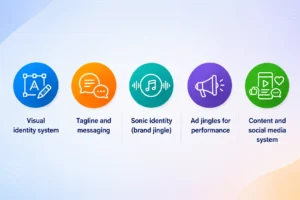
    Quick Summary: The 5 Brand Assets

    1. Visual identity system
    2. Tagline and messaging
    3. Sonic identity (brand jingle)
    4. Ad jingles for performance
    5. Content and social media system

    Each one plays a different role, but together they create a complete brand system.

    1) Logo and Visual Identity System

    Definition:
    A visual identity system is a consistent set of colors, fonts, layouts, and design rules used across all brand touchpoints.

    Key point:
    A logo alone does not build brand recall. Consistent visual patterns do.

    Why it matters

    People do not remember brands easily. They remember repeated patterns.

    When your brand looks the same across ads, website, packaging, and social media, it becomes easier to recognize. This reduces mental effort and improves recall.

    That is why you can recognize brands like Apple or Zomato instantly, even without reading the name.

    Where brands go wrong

    • They design a logo and stop there
    • Colors and fonts keep changing
    • Social media posts look inconsistent
    • Different teams interpret the brand differently

    This breaks recognition.

    How to execute better

    • Fix a color palette and use it everywhere
    • Limit fonts to one or two
    • Define a clear image and layout style
    • Create simple, usable brand guidelines

    Clear takeaway:
    Consistency in visuals increases recognition, and recognition increases trust.

    2) Tagline and Messaging Framework

    Definition:
    A tagline is a short, memorable line that communicates your brand’s core promise, supported by a consistent messaging structure.

    Key point:
    If people do not understand your brand quickly, they will ignore it.

    Why it matters

    Your messaging helps people answer one question fast. Why should I care?

    A strong tagline positions your brand clearly in the customer’s mind.

    Examples:

    • “Daag Ache Hain” reframed stains as a positive
    • “Just Do It” represents action and intent

    These work because they connect to a clear idea.

    Where brands go wrong

    • Using vague lines like “best quality”
    • Copying competitors
    • Changing messaging frequently
    • No link between tagline and actual offering

    This creates weak positioning.

    How to execute better

    • Define the exact problem you solve
    • Write a simple, clear tagline
    • Test if people can recall it easily
    • Use the same messaging across all channels

    Clear takeaway:
    Clear messaging reduces confusion, and less confusion leads to better conversion.

    3) Brand Jingle or Sonic Identity

    Definition:
    A sonic identity is a short, distinctive sound or tune that helps people recognize your brand through audio.

    Key point:
    Audio is processed faster and remembered longer than visuals.

    Why it matters

    People often scroll without paying full attention. But they still hear.

    A consistent sound creates memory even in low-attention environments.

    Examples:

    • Airtel tune
    • Intel sound
    • Netflix intro

    You recognize them instantly without seeing anything.

    Where brands go wrong

    • Ignoring audio branding
    • Using different music in every video
    • No consistent sound identity

    This leads to zero audio recall.

    How to execute better

    • Create a short, simple, unique sound
    • Use it in all ads and videos
    • Keep it consistent over time
    • Avoid frequent changes

    Clear takeaway:
    Repeated sound builds memory, and memory builds familiarity and trust.

    4) Ad Jingles for Sales and Performance

    Definition:
    Ad jingles are short, repetitive audio messages designed to improve ad recall and drive conversions.

    Key point:
    A good ad jingle improves both recall and response in high-frequency advertising.

    Why it matters

    In performance marketing, repetition drives results.

    A simple and repetitive jingle makes your product easier to remember when the customer is ready to buy.

    This is why many local and D2C brands use highly repetitive audio lines.

    Where brands go wrong

    • Making jingles too complex
    • Not mentioning the product clearly
    • Focusing more on music than message
    • No alignment with the offer

    This reduces effectiveness.

    How to execute better

    • Keep it short and repetitive
    • Include the product or brand name clearly
    • Align it with your offer
    • Test and optimize based on performance

    Clear takeaway:
    Simple and repetitive messaging increases ad recall and improves conversion rates.

    Brand Jingle

    5) Content and Social Media System

    Definition:
    A content system is a structured approach to consistently creating and distributing relevant content.

    Key point:
    Consistency in content builds familiarity, and familiarity builds trust.

    Why it matters

    People trust brands they see regularly.

    If your brand shows up consistently with useful or relevant content, it stays top of mind.

    That increases the chances of being chosen later.

    Where brands go wrong

    • Posting without a strategy
    • Chasing every trend
    • Inconsistent activity
    • No connection between content and brand

    This creates noise instead of impact.

    How to execute better

    • Define 3 to 4 clear content themes
    • Choose formats that suit your audience
    • Maintain a consistent posting schedule
    • Balance trends with brand identity

    Clear takeaway:
    Consistent visibility increases trust, and trust increases long-term sales.

    Why These 5 Brand Assets Matter Together

    Each asset solves a different problem:

    • Visual identity builds recognition
    • Messaging builds clarity
    • Sonic identity builds memory
    • Ad jingles drive action
    • Content builds consistency

    Key point:
    A strong brand is not one asset. It is a system of aligned assets.

    If one is missing, the system weakens.

    Example:

    • Good ads but weak identity lead to poor recall
    • Strong visuals but weak messaging lead to confusion

    Alignment is what creates impact.

    The Bigger Mistake Most Business Owners Make

    Most people treat branding as a one-time task.

    It is not.

    Brand assets only work when they are used consistently over time.

    Another common mistake is chasing trends instead of building systems.

    • Trends give short-term attention
    • Systems build long-term growth

    Final Takeaway

    If you are a business owner, ask better questions:

    • Will people remember my brand?
    • Will they recognize it quickly?
    • Will it stay consistent over time?

    Because branding is not about what you create once.

    It is about what people remember every time they see or hear your brand.

    When these five assets are built and used correctly, your brand becomes easier to recall, easier to trust, and easier to choose.

  • Why Employees Ignore Company Values (And What to Do About It)

    Why Employees Ignore Company Values (And What to Do About It)

    Most organisations have defined values.
    They appear on walls, in decks, and on websites.

    Yet, day-to-day behaviour does not reflect them.

    This is a system failure, not a people problem.

    At Digikore Studios, we analyse this as a gap between definition and execution. Values are stated clearly, but they are not designed into how the organisation operates.

    What company values are supposed to do

    Company values are not slogans. They are operating principles.

    They should:

    • Guide decisions under pressure
    • Standardise behaviour across teams
    • Reduce ambiguity in communication
    • Create a consistent internal culture

    If values are working, two teams in different locations should make similar decisions in similar situations.

    If that is not happening, values are not functioning.

    Why employees ignore company values

    There are consistent structural reasons.

    1. Values are defined, not operationalised
      Terms like integrity or innovation are broad. Without clear behavioural definitions, each team interprets them differently.

    Result: inconsistency.

    1. No linkage to daily workflows
      Employees optimise for what is measured and reviewed.

    If values are not integrated into meetings, approvals, or performance systems, they remain irrelevant to execution.

    1. Leadership variance
      Employees calibrate behaviour based on leadership actions.

    If leaders apply values inconsistently, teams default to local norms.

    1. Low frequency of reinforcement
      Values are introduced once and then not revisited.

    Without repetition, retention drops. Without retention, adoption does not occur.

    1. Lack of shared, repeatable formats
      Static formats like documents do not scale well across teams and cities.

    They inform, but they do not standardise experience.

    What changes behaviour

    To make values effective, move from communication to system design.

    1. Convert values into observable behaviours
      Each value must map to specific actions.

    Example:
    “Ownership” → closes tasks without escalation delays, communicates blockers early.

    This reduces interpretation variance.

    1. Embed values into operating systems
      Values must appear in:
    • Meeting structures
    • Decision frameworks
    • Performance reviews
    • Internal communication

    If they are not part of systems, they will not influence outcomes.

    corporate anthem

    1. Standardise high-frequency experiences
      Focus on moments that repeat:
    • Onboarding
    • Townhalls
    • Team meetings
    • Internal campaigns

    Consistency in these moments creates behavioural alignment over time.

    1. Reduce interpretation with shared formats
      You need formats that are:
    • Simple to understand
    • Easy to repeat
    • Consistent across locations

    This is where corporate anthem frameworks are effective. They convert values into a shared, repeatable expression that carries both message and emotion.

    1. Align leadership behaviour with defined values
      No system compensates for inconsistent leadership.

    If leaders model the values, adoption increases. If not, values are ignored regardless of communication effort.

    What does not work

    • Publishing values without behavioural definitions
    • One-time communication during onboarding
    • Relying only on documents or presentations
    • Expecting organic adoption without system support

    These approaches create awareness, not alignment.

    What a working system looks like

    A functional values system has three characteristics:

    Clarity
    Values are specific and observable.

    Repetition
    Values appear consistently across key organisational moments.

    Consistency
    The same message and experience are delivered across teams and locations.

    When these conditions are met, values shift from statements to behaviour.

    Role of a corporate anthem in value adoption

    A corporate anthem is not a branding add-on. It is a delivery mechanism.

    It:

    • Encodes vision, culture, and values into a single format
    • Reduces interpretation across teams
    • Creates a repeatable experience in high-impact moments
    • Scales across cities without message distortion

    This is part of a broader sonic branding approach where sound is used to standardise identity.

    At Digikore Studios, we use this to help organisations move from stated values to experienced values.

    How Digikore Studios approaches this

    We treat values as an execution problem.

    Our approach:

    • Define values in behavioural terms
    • Structure them into repeatable formats
    • Build assets that scale across teams

    A corporate anthem becomes a core asset within this system, ensuring that values are not just communicated but consistently experienced.

    Conclusion

    Employees do not ignore values by choice.
    They follow what is clear, repeated, and reinforced.

    If values are not part of systems, they will not influence behaviour.

    If they are not experienced, they will not be remembered.

    Values become effective only when they are designed into how the organisation operates.

    FAQs

    Why do employees ignore company values?
    Because values are not connected to daily workflows or reinforced consistently.

    Are company values still important?
    Yes, but only when they are operationalised into behaviour and systems.

    How can organisations improve value adoption?
    By defining behaviours, embedding values into systems, and creating repeatable experiences.

    What role does leadership play?
    Leadership behaviour sets the standard. Inconsistency at the top leads to inconsistency across teams.

    How does a corporate anthem help?
    It creates a shared, repeatable expression of values that reduces interpretation gaps and improves alignment across locations.

  • How to Create Consistency Across Teams, Cities, and Cultures

    How to Create Consistency Across Teams, Cities, and Cultures

    As organizations grow, consistency becomes harder to maintain.

    Different cities bring different work styles.
    Different teams interpret the same message in different ways.
    Culture starts to drift.

    What begins as a strong, unified organization slowly turns into multiple versions of the same brand.

    At Digikore Studios, we see this problem often. The issue is not lack of effort. It is lack of a system.

    What consistency actually means

    Consistency is not about making everyone think the same way. That is unrealistic.

    It is about ensuring that everyone understands and represents the same core identity.

    This includes:

    • How your organisation communicates
    • What your brand stands for
    • How teams behave and collaborate
    • What experience you deliver internally and externally

    Without this, growth creates confusion instead of scale.

    Why consistency breaks as you grow

    There are three common reasons:

    1. Interpretation gap
      Leadership defines the vision, but teams interpret it differently.
    2. Communication dilution
      As messages pass through layers, they lose clarity.
    3. Cultural variation
      Different cities and regions naturally bring different behaviors and expectations.

    None of these are avoidable. But they can be managed.

    What does not work

    Most companies try to fix this with documents.

    Brand guidelines.
    Culture decks.
    Long PDFs.

    These are necessary, but not sufficient.

    People do not absorb identity through documents. They absorb it through repeated, shared experiences.

    What actually works

    Consistency requires a system that is:

    • Easy to understand
    • Easy to repeat
    • Hard to distort

    This is where most organizations fail.

    You need formats that travel well across teams and locations.

    Build a clear core

    Start with clarity at the center.

    Define:

    • Vision
    • Mission
    • Values
    • Tone of communication

    But go one step further.

    Simplify it to a form that anyone in the organization can recall without effort.

    If your teams cannot repeat it, they cannot represent it.

    Corporate Anthem

    Standardize how it is experienced

    Consistency is not just what you say. It is how people experience it.

    This includes:

    • Internal meetings
    • Townhalls
    • Events
    • Onboarding
    • Internal campaigns

    These are high-impact moments where culture is reinforced.

    If each team runs these differently, your identity fragments.

    Use repeatable formats

    To scale consistency, you need repeatable formats.

    Not just documents, but experiences.

    This is where structured sonic branding becomes effective.

    A corporate anthem, for example, creates a shared reference point.

    No matter the location, the message and emotion remain the same.

    It reduces interpretation. It increases alignment.

    Align leadership behavior

    No system works if leadership is inconsistent.

    Teams do not follow documents. They follow behavior.

    If leadership communication varies across regions, inconsistency becomes normalized.

    Consistency at the top creates consistency across the organisation.

    Measure and correct

    Consistency is not a one-time setup.

    You need to observe:

    • How teams communicate
    • How events are conducted
    • How the brand is represented

    Identify gaps early and correct them.

    Small deviations, if ignored, become cultural differences over time.

    Where most companies go wrong

    They assume consistency will happen naturally.

    It does not.

    Without a structured approach, growth increases variation, not alignment.

    How Digikore Studios approaches this

    At Digikore Studios, we treat consistency as a design problem.

    We focus on:

    • Simplifying brand identity
    • Converting it into repeatable formats
    • Creating assets that travel across teams and locations

    One of the most effective tools we use is a corporate anthem.

    It acts as a fixed reference for culture, tone, and identity.

    It ensures that no matter where your team is, the core message stays intact.

    Final thought

    You cannot control how people think.
    But you can control what they consistently experience.

    If your organisation sounds, feels, and communicates differently across locations, you do not have a scaling system yet.

    You have multiple versions of your brand.

    Consistency is not created by instruction.
    It is created by design.

    FAQs

    1. Is consistency possible across different cultures
      Yes, if you focus on shared identity, not identical behavior.
    2. Do brand guidelines solve this problem
      They help, but they are not enough on their own.
    3. What is the fastest way to improve consistency
      Standardize key experiences like onboarding, townhalls, and internal communication.
    4. How does a corporate anthem help
      It creates a single, repeatable expression of your brand that reduces interpretation gaps.
    5. Who should drive consistency in an organisation
      Leadership, supported by HR and brand teams.
  • Corporate Anthems as Strategic Brand Assets (Not Just Songs)

    Corporate Anthems as Strategic Brand Assets (Not Just Songs)

    Most organizations invest heavily in how they look and what they say. Very few invest in how they sound. That gap is where a corporate anthem becomes powerful.

    At Digikore Studios, we do not see a corporate anthem as a song created for entertainment. We see it as a structured brand asset. It carries identity, reinforces culture, and creates recall in a way that text and visuals alone cannot.

    What is a corporate anthem?

    A corporate anthem is a custom-composed piece of music that represents an organization’s identity. It is built around the company’s purpose, values, and voice. Unlike a jingle, it is not created for short-term advertising. It is designed for long-term internal and external alignment.

    Think of it as your corporate profile, but expressed through sound and emotion. It is consistent, repeatable, and adaptable across multiple touchpoints.

    Corporate anthem vs brand jingle

    A brand jingle is typically campaign-driven. It is short, catchy, and built for immediate recall in ads. Its role is to support marketing.

    A corporate anthem is deeper. It is not tied to a single campaign. It reflects the organization itself. It can be used in internal events, onboarding, brand films, leadership communication, and large-scale presentations.

    In simple terms, a jingle sells a product. A corporate anthem represents the company.

    Who is it for

    A corporate anthem is most effective for organizations that are scaling, evolving, or trying to unify their identity.

    It is relevant for:

    • Large enterprises with distributed teams
    • Companies undergoing rebranding or repositioning
    • Organizations with strong internal culture initiatives
    • Founder-led brands that want consistent storytelling
    • Companies that invest in premium brand perception

    If your organization struggles with fragmented communication or inconsistent messaging, an anthem creates a single emotional reference point.

    What a corporate anthem conveys

    A well-built corporate anthem communicates more than words can.

    It conveys:

    • The organization’s vision and direction
    • Its core values and beliefs
    • The tone of its work environment
    • The energy of its people
    • The promise it makes to customers and stakeholders

    When employees hear it, they should feel connected. When external audiences hear it, they should understand what the brand stands for without needing an explanation.

    This is where sonic branding becomes a competitive advantage. Sound creates memory faster than text. It also builds emotional consistency across touchpoints.

    Corporate Anthems

    What it is made of

    A corporate anthem is not created randomly. It is structured.

    At Digikore Studios, the process typically includes:

    1. Brand decoding
      We start by understanding the organization. This includes leadership vision, company history, tone of communication, and long-term goals.
    2. Narrative building
      We convert business language into a clear and relatable story. This becomes the lyrical foundation.
    3. Sonic direction
      Music style is selected based on brand personality. A premium brand will not sound like a startup. A technology company will not sound like a heritage brand.
    4. Composition and production
      This is where music, lyrics, and arrangement come together. Every element is intentional. Tempo, instruments, and vocal tone all influence perception.
    5. Adaptation
      The anthem is then structured in multiple formats. Full version, short edits, instrumental versions, and event cuts.

    The outcome is not just a song. It is a usable brand system.

    How effective is it for your organization?

    Most organizations underestimate how difficult it is to maintain consistency at scale.

    A corporate anthem solves three practical problems:

    1. Internal alignment
      Employees across departments and locations begin to share a common emotional understanding of the brand.
    2. Recall and differentiation
      In crowded markets, sound becomes a unique identifier. People may forget a tagline. They are less likely to forget a well-crafted anthem.
    3. Multi-channel usability
      From annual events to digital content, the same asset can be reused without losing relevance.

    This makes it a high-leverage investment, especially for companies focused on long-term brand building rather than short-term campaigns.

    A note on brand jingles

    Brand jingles still have their place. They are effective in advertising and quick promotions. However, they are limited in depth.

    At Digikore Studios, we often position jingles as an extension of a larger audio identity. The corporate anthem becomes the core, and jingles become lighter, campaign-specific variations derived from it.

    This ensures consistency instead of fragmentation.

    A short example

    To make this tangible, here is a simple representation of how a corporate anthem can sound in structure:

    “Built on vision, driven by purpose
    Every step forward, we rise with intent
    Together we shape what tomorrow becomes
    One voice, one mission, one identity.”

    This is not about poetic complexity. It is about clarity and alignment.

    Why are companies moving towards this

    Branding is no longer just visual. Organizations are moving towards multisensory identity systems.

    Sound is becoming critical because:

    • It travels across formats easily
    • It creates a faster emotional connection
    • It strengthens brand memory
    • It works both internally and externally

    This is why more companies are investing in structured corporate anthem development rather than isolated music assets.

    How Digikore Studios approaches this

    At Digikore Studios, we approach corporate anthems as long-term assets, not one-time deliverables.

    Our focus is on:

    • Strategic alignment before composition
    • Simplicity in messaging
    • Premium sound design
    • Usability across business functions

    We do not start with music. We start with meaning. The music follows.

    FAQs

    1. How long should a corporate anthem be
      Typically between 60 and 120 seconds. It should be long enough to convey meaning but short enough to retain attention.
    2. Can it be used internally and externally
      Yes. That is the primary advantage. It works for employees, clients, and stakeholders.
    3. How is it different from a brand film soundtrack
      A soundtrack supports a visual. A corporate anthem can exist independently and still communicate the brand.
    4. How often does it need to be updated
      Not frequently. If built correctly, it can last for years with minor adaptations.
    5. Is it relevant for small companies
      It depends on intent. If the company is focused on long-term brand building and culture, it can be valuable even at an early stage.
    6. What is the typical timeline
      Usually between two and four weeks, depending on complexity and stakeholder involvement.

    A corporate anthem is not about adding music to your brand. It is about giving your brand a voice that people can recognize, remember, and align with.

  • Dot & Key Still Uses Jingles, Despite Having Everything Else.

    Dot & Key Still Uses Jingles, Despite Having Everything Else.

    Let’s be honest for a second.

    Most brands today think they’ve cracked visibility.

    You’ve got polished creatives, good-looking product shots, influencer campaigns, and solid ad spends. On paper, everything looks right.

    Dot & Key has all of that, too. Probably better than most.

    And yet—they still invest in jingle production.

    That’s not a random creative decision. It’s a signal. And if you’re paying attention, it tells you exactly where most brands are going wrong.

    First, let’s get clear—what is jingle production?

    In simple terms, jingle production is about creating short, memorable audio hooks that people instantly associate with your brand.

    Not songs. Not background music.

    We’re talking about tight, repeatable sound bites that:

    • stick in your head
    • show up consistently
    • build familiarity over time

    Today, Jingle production isn’t about being catchy for the sake of it. It’s about being remembered without effort.

    Dot & Key doesn’t have a visibility problem

    This is important.

    They already have:

    • strong branding
    • clean, premium visuals
    • well-executed campaigns
    • influencer-led distribution

    So no—they’re not using Custom brand jingles to compensate for weak marketing.

    They’re doing it on top of everything else.

    Which leads to the real question:
    Why would a visually strong brand still rely on sound?

    Because visibility isn’t the real problem anymore

    Here’s what most brands miss.

    Getting seen is easy today.

    Getting remembered? That’s the hard part.

    People scroll fast. Really fast.

    Your ad might show up… but:

    • It’s skipped in seconds
    • It blends with everything else
    • It’s forgotten almost immediately

    This is where a solid Sonic branding strategy changes the game.

    Because while visuals are being skipped, audio is still being processed.

    Even passively.

    What jingles actually do (and most people misunderstand this)

    Many brands treat jingles as a creative add-on.

    “Nice to have.”

    That’s the mistake.

    A good jingle is not decoration.
    It’s a memory shortcut.

    It helps your audience:

    • recognize you faster
    • recall you later
    • trust you sooner

    That’s why Custom brand jingles work so well, they reduce the effort needed to remember you.

    And in today’s attention economy, lower effort = higher recall.

    This isn’t just Dot & Key, it’s a bigger shift

    If you zoom out, you’ll notice a pattern.

    Brands are quietly investing more in sound.

    • CRED has a consistent audio tonality
    • Zepto uses fast, distinctive sound cues
    • McDonald’s has built decades of recall with a simple sonic hook
    • Intel did it with just five notes

    This is what Audio branding in the AI era looks like.

    Not louder ads. Smarter recall.

    Jingle Production

    Where AI fits into all of this

    Let’s address the obvious: yes, AI in jingle production is changing things.

    You can now:

    • generate ideas faster
    • test multiple variations
    • reduce production time significantly

    But here’s the part most people get wrong.

    AI alone won’t give you a memorable jingle.

    Because memory isn’t just structure—it’s emotion, timing, and cultural fit.

    That’s where Human and AI collaboration in music actually matters.

    AI can speed things up.
    But humans decide what’s worth remembering.

    What Dot & Key is really doing right

    They’re not just making ads.

    They’re building consistency across exposure.

    Every time someone hears that sound, even subconsciously, it reinforces the brand.

    That’s the compounding effect most brands ignore.

    Instead, they:

    • keep changing creatives
    • keep testing visuals
    • keep increasing spend

    …without building anything that sticks.

    If you’re a brand, here’s what you should actually think about

    Forget “should we use a jingle?”

    That’s the wrong question.

    Ask this instead:

    • What does my brand sound like?
    • Can someone recognize us without seeing us?
    • Are we consistent across campaigns?
    • Are we building recall, or just chasing impressions?

    If you don’t have clear answers, you don’t have a complete brand system yet.

    A quick reality check

    Visual quality is no longer a differentiator.

    Everyone has:

    • good cameras
    • good edits
    • good design

    That layer is saturated.

    Sound isn’t.

    And that’s exactly why jingle production is becoming more relevant again.

    Final thought

    Dot & Key didn’t add jingles because they were missing something.

    They added it because they understand something most brands don’t:

    Attention gets you noticed.
    Sound makes you remember.

    And in a market where everyone is fighting for attention,
    Memory is where the real advantage is built.