
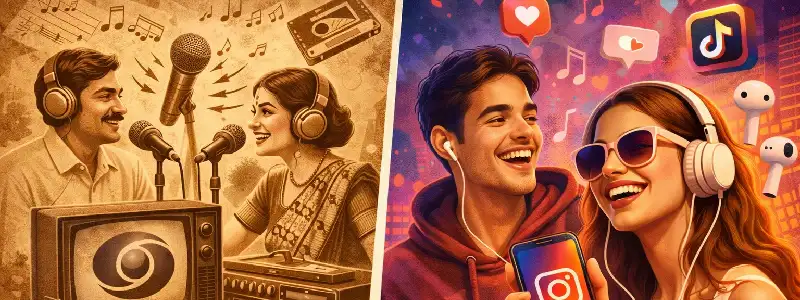
There was a time when a brand’s sound did not try to impress anyone. It did not announce itself. It arrived through a television set that everyone in the room was already facing. There was nothing else competing for attention. No second screen. No scrolling thumb. Just sound entering a shared space and repeating itself until it stops feeling new.
That is how many Indians first learned what sound branding actually does or how it works. Not through strategy decks or brand manuals, but through real, raw experience. We used to not just analyse but absorb these jingles and relate to them. Years later, the memory still lives somewhere unguarded. A few notes play in surround, and we recognise them even before thinking about that brand.
That contrast becomes unavoidable today, when most brand sounds vanish almost as soon as they appear.
This is not about nostalgia. It is about understanding what changed, and what quietly broke along the way.
When Sound Was Built to Stay
In the Doordarshan era, brands behaved as if time were available in abundance.
They chose one sound and stayed with it. Not because it was perfect, but because consistency itself was the strategy. The sound did not evolve every quarter. It was not refreshed for novelty. It repeated, patiently, until familiarity replaced effort.
This worked because human memory does not respond to cleverness. It responds to stability. What repeats without demanding attention gets stored. What stays the same becomes trustworthy. Those jingles were not memorable because they were dramatic. They were memorable because they were predictable.
No dashboards were tracking the recall. No metrics validating long-term memory. Decisions were guided by observation. By instinct. By the understanding that repetition was not boring for the audience, only for the creator.
Over time, the sound crossed an invisible threshold. It stopped feeling like advertising and started feeling like identity. The brand no longer needed explanation. The sound was enough.
The Moment Sound Became Content
That balance shifted when media stopped being shared and started being personalised.
The Instagram age introduced a new listening environment. Sound is now encountered mid-scroll, half-muted, layered with other audio, often disposable by design. It has seconds to work, or it is replaced.
In this environment, brands no longer assume time. They assume resistance.
So sound adapts. It becomes shorter. Faster. Borrowed from whatever is already trending. The objective shifts from building brand recall to winning attention in the moment.
This is not a lack of creativity. It is a response to pressure.
But pressure changes behaviour.
When sound is treated as content, it inherits content’s lifespan. It performs, peaks, and disappears. The mind does not invest in remembering it because experience has taught it not to.
The result is visibility without memory. Plenty of reach. Very little recognition.
Being Heard Is Not the Same as Being Remembered
Modern branding measures what can be seen.
Views. Plays. Engagement.
Memory does not show up on dashboards. It appears later, in preference, trust, and familiarity. By then, it is difficult to trace.
In the Doordarshan era, sound was designed for accumulation. Each repetition added weight. Over time, the sound carried meaning without explanation.
Today, sound is designed for momentum. Momentum looks impressive. Memory looks quiet.
Most brands choose momentum because it offers immediate proof.
But momentum fades. Memory compounds.
That difference defines what lasts.
From Shared Culture to Fragmented Attention
Earlier, sound existed inside a shared cultural rhythm. One jingle could speak to millions of homes at once. Listening conditions were similar. Context was common.
Today, sound moves through fragmented spaces. Feeds are personalised. Audiences split into niches. What works in one context feels irrelevant in another. Consistency feels risky. Adaptation feels safer.
So brands keep changing their sound, hoping relevance will replace recognition.
Often, it does not.
What emerges is abundance without ownership. Sound everywhere, but nothing that feels unmistakably tied to one brand. The brand jingle disappears before it can settle.
What the Brain Still Responds To
The past does not offer templates. It offers principles.
The human brain has not changed its preferences. It still remembers what repeats. It still trusts what feels familiar. It still recognises what remains stable.
A strong sound identity does not need to be loud. It needs to be consistent. It needs to belong to only one brand. When it plays, it should answer a simple question without effort.
Who is this?
Not what is trending. Not what is new.
Designing Sound as Infrastructure
Treating sound seriously requires restraint.
It means resisting constant reinvention. It means repeating what works even when repetition feels uncomfortable internally. It means designing sound not as a campaign asset, but as infrastructure.
This does not require long compositions or nostalgic callbacks. Sometimes it is a short cue. Sometimes a specific rhythm. Sometimes, a tone that stays unchanged even as visuals evolve.
Formats can adapt. Identity should not.
Brands that approach sonic branding this way rarely see instant spikes. What they see instead is familiarity growing quietly. The sound starts needing less explanation. It feels known. Expected. Trusted.
Why Memory Is Still the Advantage
Attention can be rented. Memory has to be earned. Platforms will change. Algorithms will shift. Formats will be replaced.
But a sound that people recognise without effort continues to work wherever it appears. It carries meaning without demanding space. The Doordarshan era reminds us of something easy to overlook. Brands do not live on platforms. They live in people.
The real decision for brands today is not whether sound matters. It is whether they are designing sound to pass by or to stay. That choice does not show results immediately. But over time, it determines what remains familiar and what quietly disappears.