Author: digikore

  • 5 Effective Ways Custom Brand Jingles Boost Instagram Ads

    5 Effective Ways Custom Brand Jingles Boost Instagram Ads

    If you run a small business today, you already know how competitive Instagram advertising has become. Every brand is trying to capture attention in the same scrolling feed. Creative visuals help, strong messaging helps, but something else often determines whether people actually remember your brand later.

    Sound.

    When you hear a familiar tune connected to a brand, recognition happens instantly. You do not need to see the logo. The sound alone tells you which company it is. That is the idea behind Audio Branding, and it is no longer limited to global corporations.

    Today, small businesses are beginning to use short brand jingles in their Instagram ads to create the same kind of recognition. When used correctly, even a five-second jingle can make your ads feel more memorable and professional.

    At Digikore Studios, we often see businesses focus heavily on visuals while ignoring the impact of sound. But once you start thinking of sound as part of your brand identity, your advertising begins to work very differently.

    Here are five practical ways a custom brand jingle can strengthen your Instagram ads.

    A recognizable jingle helps people remember your brand

    Instagram users scroll quickly. Your ad may only get a few seconds of attention before someone moves on to the next video.

    In that short moment, your goal is simple. You want the viewer to remember your brand later.

    This is where a custom jingle becomes powerful.

    When the same melody appears across multiple ads, it slowly becomes familiar. Even if someone does not consciously notice it the first time, repetition builds recognition. Eventually the sound itself becomes associated with your business.

    This is the foundation of brand sound identity. Just like a logo or a color palette, your brand begins to develop a recognizable sound.

    Many large companies invest heavily in corporate audio identity for exactly this reason. The sound becomes part of how customers identify them.

    The same principle works for small businesses running Instagram ads.

    Sound can stop the scroll faster than visuals

    Most Instagram ads rely purely on visuals to capture attention. Bright colors, quick edits, animated text. But because so many brands use the same approach, it becomes harder to stand out.

    Audio changes the experience.

    When a distinctive jingle starts playing at the beginning of an ad, it creates an immediate hook. The brain naturally reacts to sound patterns, especially musical ones.

    Instead of blending in with other ads, your video suddenly feels different.

    This is one reason many businesses are now exploring audio marketing solutions as part of their advertising strategy. Sound gives your content another dimension. It adds personality and helps break the pattern viewers are used to seeing in their feeds.

    A short and catchy melody at the start of your ad can make people pause just long enough to notice your message.
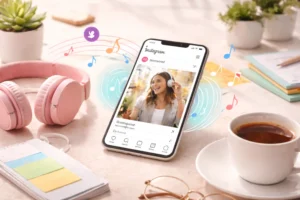
    Audio Branding

    A jingle strengthens your brand personality

    Every brand has a personality, whether it is intentional or not.

    Some businesses feel energetic and youthful. Others feel calm, premium, or trustworthy. Usually, this personality is expressed through visuals such as colors, typography, and design style.

    Sound can greatly reinforce that personality.

    A bright, upbeat jingle might suit a café, bakery, or lifestyle brand. A sleek electronic tone may work better for a technology startup. A bold rhythmic sound could match a fitness brand.

    When your sound aligns with your visual identity, the brand experience becomes more cohesive. This is why many companies work with an audio branding agency to shape their overall sonic identity.

    A thoughtful branded music strategy ensures that every time someone hears your ad, the sound supports the story your brand is trying to tell.

    Consistent sound ties your campaigns together

    Instagram advertising often changes from week to week. One campaign may promote a product launch, another might highlight a discount, and another could focus on brand awareness.

    The visuals change constantly. Without a consistent element, your ads can start to feel disconnected from each other.

    A recurring jingle solves that problem.

    Even if the visuals are completely different, the same short melody creates continuity. Viewers begin to recognize that the ads belong to the same brand.

    Over time, that consistency strengthens your corporate audio identity. The sound becomes part of your brand’s signature.

    Professional sound branding services often recommend creating a flexible sonic theme that can appear in different versions across multiple ads. The melody stays recognizable while the style adapts to different campaigns.

    This approach helps your advertising feel more structured and intentional.

    Memorable sound improves long-term brand recall

    One of the most valuable benefits of Audio Branding is memory.

    Music has a unique ability to stay in the mind long after we hear it. Even a short melody can trigger recognition weeks or months later.

    This is exactly why jingles have remained effective in advertising for decades.

    When your Instagram ads consistently include the same sonic cue, viewers gradually begin to associate that sound with your brand. The next time they hear it, the memory returns instantly.

    This familiarity creates trust.

    People are more likely to interact with brands that feel recognizable. And when your advertising uses a consistent brand sound identity, recognition becomes much easier to achieve.

    Why professional audio branding makes a difference

    Creating a memorable jingle is not just about composing a short piece of music. It requires an understanding of how sound fits into a brand’s broader marketing strategy.

    A well-produced jingle should work across multiple platforms. Instagram ads, promotional videos, reels, and other digital campaigns should all be able to use the same audio signature.

    This is where experienced audio branding agency teams can help shape a consistent sonic identity.

    At Digikore Studios, our focus is on helping businesses build that identity through audio logo creation, voice branding services, and tailored sound branding services. The goal is not simply to produce music but to create a recognizable sound that represents your brand across every piece of content you publish.

    When that sound becomes familiar to your audience, your advertising begins to work harder for you.

    Questions businesses often ask about brand jingles

    What is audio branding, and why does it matter?
    Audio Branding uses sound elements such as jingles, sonic logos, and voice tones to create a recognizable identity for your brand.

    Are jingles still relevant in social media advertising?
    Yes. Short, memorable jingles improve recognition and help ads stand out in fast-scrolling platforms like Instagram.

    How long should a jingle be for Instagram ads?
    Most effective jingles are between three and six seconds. They should be short enough to repeat across multiple ads.

    Can small businesses benefit from audio branding?
    Absolutely. A strong brand sound identity can help smaller brands become recognizable much faster.

    What is an audio logo?
    An audio logo is a short sonic signature that represents a brand, similar to a visual logo but expressed through sound.

    Should the same jingle be used in every ad?
    Consistency helps. Repeating the same sonic element across campaigns strengthens brand recognition.


  • How Small Businesses Can Use Jingles to Compete with Big Brands

    How Small Businesses Can Use Jingles to Compete with Big Brands

    Small businesses often believe strong branding belongs only to companies with massive advertising budgets. We hear that assumption all the time.

    The reality is very different.

    Some of the most memorable brands in the world are remembered not because of how much they spent on advertising, but because of one simple thing people could recall instantly. A sound. A melody. A short musical line that stayed in the listener’s mind long after the advertisement ended.

    That is the power of a well-crafted jingle.

    At Digikore Studios, we regularly work with businesses that want to create stronger brand recall without dramatically increasing their marketing spend. In many cases, investing in custom jingle production services becomes one of the smartest branding decisions they make.

    A few seconds of music, when done correctly, can carry a brand much further than a long advertising message.

    Why Jingles Still Work in Modern Advertising

    Advertising has changed dramatically in the past decade. People now discover brands through Instagram reels, YouTube ads, podcasts, radio, streaming platforms, and television.

    What has not changed is how human memory works.

    Sound travels directly into memory in a way visuals often cannot. A short melody attached to a brand name is easier for the brain to recall than a visual advertisement seen once.

    That is why businesses are returning to structured advertising jingle production rather than using random background music in their ads.

    A jingle gives the brand a recognizable voice. Every time someone hears it, the brain connects the sound to the brand.

    For smaller businesses, that repeated recognition becomes a powerful competitive advantage.

    Small Businesses Do Not Need Big Budgets to Sound Like Big Brands

    One misconception we frequently hear is that jingles belong only to large companies.

    In reality, the advantage of audio branding is accessibility.

    When a business works with a brand jingle production company, the goal is not to create a large musical composition. The objective is to develop a distinctive sound identity that represents the brand clearly.

    This identity can appear everywhere a customer interacts with the brand.

    It may play during a radio ad.
    It might appear in a short digital advertisement.
    It could even be used in social media content.

    The moment people start recognizing that sound, the brand begins building familiarity. That familiarity is often what separates brands that people remember from those they forget within seconds.

    Experienced corporate jingle creators focus on exactly this outcome. The music is designed for recognition, not complexity.

    Custom Jingle Production Services

    Where Jingles Work Best Today

    Jingles used to be associated mainly with television commercials. That perception has changed.

    Today, businesses use them across several marketing platforms.

    Radio remains extremely effective for local visibility. A well-produced piece of radio jingle production allows a brand to repeat its message multiple times during the day. Each repetition reinforces memory.

    Television advertising continues to rely on sound cues as well. Short, structured TV commercial jingle production ensures that even a brief advertisement carries a recognizable brand identity.

    Digital marketing has made jingles even more valuable.

    Short video platforms demand immediate attention. When a brand uses a recognizable sound created by a catchy brand jingle maker, viewers can identify the brand within seconds.

    In fast-scrolling environments, those seconds matter.

    What Actually Makes a Jingle Memorable

    People often assume catchy music is simply luck. In practice, strong jingles follow a very deliberate creative process.

    The melody must be simple enough to remember easily. If listeners cannot hum it after hearing it once or twice, it will likely fail as a branding tool.

    The brand name must fit naturally within the rhythm of the music. Forced lyrics often weaken the effect.

    Most importantly, the emotional tone must match the brand itself. A restaurant brand, for example, requires a completely different sound from a corporate consulting firm.

    Inside a professional jingle music production studio, this process involves much more than composing music. It includes understanding the brand personality, the audience, and the advertising environment where the jingle will live.

    Only when those elements align does the jingle begin to perform its real role as a branding asset.

    The Long-Term Advantage of a Jingle

    Unlike many advertising assets, a jingle does not disappear after a single campaign.

    Once created, it can be reused across multiple forms of communication. Businesses often use the same jingle for radio ads, digital campaigns, and television spots for years.

    Over time, the repetition builds recognition.

    People begin identifying the brand the moment the music starts. In many cases, they recognize the sound even before hearing the company name.

    At Digikore Studios, we often remind clients that a jingle is not just an advertisement. It becomes part of the brand’s identity. The longer it is used consistently, the stronger that identity becomes.

    When Businesses Should Consider Jingle Production

    Most businesses start exploring custom jingle production services when they notice that their advertising lacks memorability.

    If customers struggle to recall the brand after seeing an ad, the message is not working hard enough.

    This is where a dedicated brand jingle production company becomes valuable. The team focuses on creating a sound identity that reinforces every advertisement the business produces.

    Instead of launching campaigns that disappear quickly, the brand begins building a recognizable presence.

    Over time, that recognition becomes one of the most powerful marketing assets a business can own.

    Frequently Asked Questions

    What is a brand jingle in advertising?
    A brand jingle is a short musical piece that represents a company. It combines melody and messaging so audiences remember the brand more easily.

    Do small businesses really benefit from jingles?
    Yes. A memorable jingle helps smaller brands build recognition quickly, even when competing against companies with larger marketing budgets.

    How long should an advertising jingle be?
    Most effective jingles range between three and ten seconds. The goal is quick recognition rather than a full musical composition.

    Where can businesses use their jingle?
    Jingles can appear in radio ads, television commercials, digital advertisements, social media content, and podcast promotions.

    What makes a jingle memorable?
    Simple melodies, clear brand mentions, and consistent repetition usually create the strongest recall.

    How do businesses choose the right production partner?
    Look for a studio with experience in advertising strategy, branding, and music production rather than just composition.

  • Audio Branding Companies in India: Why Sound Is Becoming a Growth Lever for Emerging Brands

    Audio Branding Companies in India: Why Sound Is Becoming a Growth Lever for Emerging Brands

    Audio Branding Agency help businesses decide how their brand should sound. This can include a short sound logo, background music in ads, a consistent voice style, or even the sounds used inside an app. In India’s crowded market, where small and medium brands struggle to stand out, Audio Branding is becoming an important tool. This article explains what audio branding means in simple terms, why it matters today, and how growing brands can use sound to build recognition.

    Getting Noticed Is Harder Than Ever

    If you run a small or mid-sized brand in India, you already know the reality. Every category feels crowded. Social media feeds are packed. Ads look similar. Offers sound the same.

    Even when your product is good, staying in people’s memory is difficult.

    Large brands solve this with heavy advertising. Smaller brands usually do not have that luxury. So the real question becomes: how do you make people remember you without spending excessively?

    One answer is sound.

    Most brands focus only on how they look. Very few think seriously about how they sound. That gap creates opportunity.

    What Is Audio Branding?

    What is Audio Branding?

    Put simply, it is giving your brand a consistent sound.

    It could be:

    • A short sound that plays at the end of every ad
    • A specific music style you always use
    • A certain voice tone in your videos
    • A recognisable sound inside your app

    The important word here is consistent.

    If every campaign uses different music, different tones, and different styles, people may notice the ad but not the brand. When the sound stays similar over time, recognition builds naturally.

    You may not consciously notice it, but your brain connects repeated sounds with familiarity.

    Why Audio Branding Matters More for Small and Medium Brands

    There is a common belief that Audio Branding Services are only for large companies. That is not true.

    In fact, smaller brands often benefit more.

    When your marketing budget is limited, you need each impression to work harder. A simple, well-designed sound identity used again and again across digital ads can help people recognise you faster.

    The Benefits of Audio Branding for growing brands include:

    • Better recall even with fewer ads
    • A more polished and professional image
    • Stronger emotional connection
    • Clear separation from competitors

    In many cases, small brands unintentionally weaken their identity by changing creative direction too often. A basic Audio Branding Strategy helps avoid that.

    audio branding companies

    Sonic Branding vs Audio Branding

    You may have heard the term Sonic Branding vs Audio Branding and wondered what the difference is.

    Sonic branding usually means a short sound logo. It is the small audio cue people associate with a brand.

    Audio branding is bigger. It includes the overall sound style of your brand, not just one short clip.

    For a small brand, starting with a strong sonic logo is often enough. As the brand grows, the wider system becomes more important.

    Audio Branding for Brands in Different Industries

    Audio Branding for Brands is not limited to one type of business.

    An FMCG brand can use a consistent sound in all its ads.
    A D2C brand can use similar music across Instagram, YouTube, and website videos.
    A fintech app can design sounds that feel reliable and clean.
    Even a B2B company can use a steady audio style in presentations and corporate films.

    When the sound feels aligned and repeated, the brand feels more stable. For small businesses trying to compete with bigger players, that stability matters.

    How We Work at Digikore Studios

    At Digikore Studios, we look at sound as part of brand identity, not just background music.

    We begin by understanding what the brand stands for and how it wants to be perceived. Then we define an audio direction that fits that personality. From there, we create sound assets that can be used across ads, digital platforms, and future campaigns.

    Our goal is not to create something flashy for one campaign. It is to build something that can grow with the brand.

    For small and medium brands, this approach ensures that every new piece of communication strengthens recognition instead of starting from zero each time.

    Choosing the Right Audio Branding Companies

    If you are exploring Audio Branding Agency, do not focus only on creative samples.

    Ask practical questions:

    • Do they understand brand positioning?
    • Can they create something that works across platforms?
    • Will the sound still feel relevant after two or three years?
    • Are usage rights clearly defined?

    Sound branding should feel simple and natural, not forced.

    The Future of Audio Branding in India

    The Future of Audio Branding in India looks promising because media habits are changing fast.

    People consume more video. Podcasts are growing. Regional audio content is increasing. Voice search is slowly becoming common.

    As digital spaces become noisier, brands with a clear sound identity will stand out more easily.

    For smaller brands especially, building that identity early can create an advantage before the market becomes even more crowded.

    Where Should a Small Brand Start?

    If you are unsure where to begin, keep it simple.

    Review your recent ads and videos. Do they sound related to each other? Or does each one feel different?

    Start by defining how your brand should feel. Calm? Energetic? Premium? Friendly?

    Then build a small but distinctive sonic identity and use it consistently.

    Structured Audio Branding Services can guide this process, but the principle is straightforward: repetition builds memory.

    For growing brands, memory leads to growth.

    Conclusion

    The rise of audio branding companies reflects how brands compete today. Attention is scattered. Visual clutter is everywhere.

    For small and medium brands in India, Audio Branding is not about adding noise. It is about creating recognition. When people hear you and immediately know it is you, marketing becomes more efficient.

    Sound, when used properly, becomes part of who your brand is.

    Frequently Asked Questions

    Is audio branding useful for small brands in India?

    Yes. A consistent sonic identity improves recognition without requiring large advertising budgets. For small brands, this can significantly enhance recall across digital platforms.

    How do audio branding companies support growing businesses?

    Audio branding companies analyze brand positioning and audience behavior before creating scalable sound assets. This ensures consistency across campaigns and improves perceived credibility.

    What is the difference between sonic branding and audio branding?

    Sonic branding refers to a short sound logo. Audio branding includes the broader sound system of a brand, such as music style, voice tone, and digital interface sounds.

    How much should a small brand invest in audio branding services?

    Investment depends on scope. Many Audio Branding Services are scalable, allowing brands to begin with essential assets and expand over time.

    How long does an audio branding strategy remain relevant?

    A well-designed Audio Branding Strategy can remain effective for several years, evolving gradually as the brand grows.

  • Why Great Sonic Branding Goes Beyond Trends and Technology

    Why Great Sonic Branding Goes Beyond Trends and Technology

    Most conversations around sonic branding begin with technology. Spatial audio. AI composition. Immersive sound design. Yet the brands that truly win with sound rarely start there. They start with identity.

    Great Sonic Branding is not built to impress audio professionals. It is built to shape memory. Trends shift, platforms evolve, and production tools get smarter every year. But the brands that invest in a long-term Sonic Branding Strategy create something far more valuable than novelty. They create recognition that survives change.

    For business decision-makers, this distinction matters. Because the difference between a trendy sound and a strategic one is the difference between short-term attention and long-term equity.

    What Is Sonic Branding Beyond the Definition?

    If someone asks, What is Sonic Branding, the simplest answer is this: it is a structured audio identity system that represents a brand consistently across every touchpoint.

    But that definition alone does not capture its power.

    A true Sonic Branding Strategy translates positioning into sound. It answers questions such as:

    • Should the brand feel bold or reassuring?
    • Should it sound progressive or timeless?
    • Should the emotional tone lead with energy, warmth, authority, or optimism?

    The outcome is not just an audio logo. It is a flexible sonic framework that works in advertising, digital products, events, retail environments, and customer interfaces.

    Without that strategic layer, sound becomes decorative. With it, sound becomes an asset.

    A Case Study in Longevity: Intel’s Sonic Identity

    One of the most powerful Sonic Branding Examples is Intel.

    The five-note Intel chime was introduced in the 1990s. At that time, media channels were limited compared to today. No social media platforms. No streaming dominance. No app ecosystems.

    Yet the identity endured.

    Why?

    Because it was not designed as a trend-driven music cue. It was designed as a brand signature. The five notes reflected clarity, simplicity, and technological confidence. The sound was short, distinctive, and structurally strong enough to adapt across decades of campaigns.

    As advertising styles changed, as digital video replaced traditional TV dominance, as sound design standards evolved, Intel did not abandon its core audio identity. It refined it. Orchestrations shifted. Production quality improved. But the melodic DNA remained intact.

    This is what it means to go beyond technology.

    The Benefits of Sonic Branding become visible when a brand resists reinvention for the sake of novelty and instead builds consistency into its system.

    Intel’s chime is now recognised globally within seconds. That recognition was not created by cutting-edge audio tools. It was created by disciplined repetition and strategic clarity.

    sonic branding

    Why Trend-Led Sound Fails Brands

    Many organisations approach Sonic Branding Services with campaign thinking. They want a powerful sound for the next launch or advertisement. The creative team may choose a trending musical style that feels contemporary.

    It works in the moment.

    But one year later, that sound feels dated. A rebrand follows. Another sound is introduced. Over time, the audience hears multiple tones, moods, and styles, none of which connect strongly to the brand itself.

    This fragmentation weakens brand memory.

    The problem is not creativity. It is the absence of a long-term Sonic Branding Strategy.

    Technology makes experimentation easy. Distribution channels reward constant novelty. Yet brand equity rewards consistency.

    The Expanding Role of Sonic Branding in Modern Business

    Today, Sonic Branding in Advertising is only one part of the equation.

    Brands exist in:

    • Mobile applications
    • Smart devices
    • Retail environments
    • Customer service interactions
    • Podcasts and branded content
    • Events and experiential spaces

    Each interaction produces sound, whether intentional or accidental.

    This is why Sonic Branding for Brands must now function as an ecosystem. A notification sound inside an app should feel related to the audio used in advertising. A product interface tone should align with the emotional identity expressed in campaigns.

    Without systems thinking, brands sound inconsistent across platforms.

    With a cohesive framework, every touchpoint reinforces the same emotional code.

    Technology Is Accelerating, But Identity Must Anchor

    The Future of Sonic Branding will undoubtedly involve advanced audio tools. Adaptive sound design. AI-generated compositions. Immersive audio environments. Voice-personalised experiences.

    However, technology does not replace strategy.

    If anything, rapid technological change increases the importance of core identity. As formats multiply, the need for a stable sonic foundation becomes more critical.

    Consider how streaming platforms, social media reels, and voice interfaces have shortened attention spans. Brands often have only a few seconds to register recognition. A strong audio signature cuts through immediately.

    The question for business leaders is not whether to adopt new audio technologies. It is whether their brand has a defined sonic core strong enough to survive those technological shifts.

    Beyond Recognition: Emotional Positioning

    The most overlooked aspect of Sonic Branding is emotional precision.

    Sound bypasses rational filtering. It shapes mood instantly. That makes it powerful but also risky.

    An aggressive tonal structure may undermine a brand positioned around trust. A playful melody may weaken a premium positioning. These mismatches are subtle but influential.

    This is why working with a specialised Sonic Branding Agency matters. The process must align audio characteristics with brand psychology.

    At Digikore Studios, our approach to Sonic Branding Services begins with positioning audits and brand workshops, not sound libraries. We examine category dynamics, competitor tonal landscapes, and long-term brand ambition. Only then do we design the sonic system.

    The outcome is not just music. It is alignment.

    Why Decision-Makers Should View Sonic Branding as Infrastructure

    Many leadership teams allocate significant budgets to visual identity systems while treating sound as an afterthought.

    Yet in an era dominated by video content, podcasts, connected devices, and short-form media, sound is often the first sensory cue audiences encounter.

    The measurable Benefits of Sonic Branding include:

    • Higher unaided brand recall
    • Faster recognition in short-form media
    • Stronger emotional differentiation
    • Greater consistency across global markets

    For brands competing in saturated categories, distinctiveness becomes a strategic advantage. Audio identity contributes directly to that distinctiveness.

    When done correctly, Sonic Branding for Brands functions like infrastructure. It supports every campaign, every launch, and every interaction without needing constant reinvention.

    The Real Future of Sonic Branding

    The Future of Sonic Branding will not belong to the brands with the most advanced audio plugins or the most experimental soundscapes.

    It will belong to brands that understand one principle clearly.

    Sound is a memory architecture.

    Technology will continue to evolve. Platforms will continue to fragment. But brands that anchor their audio identity in strategic clarity, emotional consistency, and disciplined execution will remain recognisable across decades.

    That is the difference between trend participation and brand building.

    Frequently Asked Questions About Sonic Branding

    1. Can I hire agencies specializing in sonic branding for startups?
      Yes. Many agencies offer scalable Sonic Branding Services tailored for startups. A structured Sonic Branding Strategy helps young brands establish early recognition, especially in digital-first markets where sound plays a critical role in apps, ads, and product experiences.
    2. What are examples of effective audio branding in consumer products?
      Strong Sonic Branding Examples include Intel’s five-note chime, Netflix’s signature “ta-dum,” and Apple’s subtle device interaction sounds. These audio cues are simple, repeatable, and emotionally aligned with the brand, making them instantly recognisable across platforms.
    3. Which businesses offer professional sonic branding services in India?
      Several specialised studios and integrated branding agencies provide professional Sonic Branding Services in India. Companies like Digikore Studios focus specifically on building structured Sonic Branding systems rather than one-off music compositions, ensuring long-term brand consistency.
    4. How can businesses use sound to build brand identity?
      Businesses can implement a defined Sonic Branding Strategy that includes audio logos, brand themes, interface sounds, and voice guidelines. Consistent use of these elements across advertising, digital platforms, and physical environments strengthens recognition and emotional connection.
    5. What are some effective sonic branding strategies used by top companies?
      Leading brands focus on simplicity, consistency, and adaptability. Their Sonic Branding systems are built around a core melodic or tonal identity that evolves with new campaigns and technologies while maintaining recognisable structure.
    6. Which companies provide sonic branding packages for product launches?
      Specialised Sonic Branding Agencies and creative studios offer launch-focused packages that include audio logos, product reveal themes, launch film scoring, and experiential sound design. The most effective providers ensure the launch sound aligns with the broader long-term brand identity.
  • The Role of Audio Branding in Viral Brand Content and Growth

    The Role of Audio Branding in Viral Brand Content and Growth

    Scroll through Instagram Reels, YouTube Shorts, or TikTok for five minutes. You might forget the visuals, but chances are a sound, tune, or beat sticks in your head long after.

    That is not accidental.

    In today’s crowded digital landscape, brands are fighting for attention in seconds, not minutes. Visuals alone are no longer enough. This is where audio branding quietly becomes one of the most powerful tools a brand can own.

    This blog breaks down how Brand jingles, sonic cues, and sound strategy help brands create viral brand content, improve sound and brand recall, and build recognition that lasts. If you are a founder, CEO, or business owner looking to stand out without shouting louder than everyone else, this matters.

    What Is Audio Branding and Why It Matters Today

    Audio branding is the strategic use of sound to represent a brand’s identity. It includes jingles, sonic logos, brand voice tones, background music, and even the way silence is used.

    Think of it as the sound version of your logo.

    Unlike visuals, sound bypasses logic and taps directly into memory and emotion. The brain processes audio faster than images. That is why a two-second sound can trigger instant brand recognition.

    In a world driven by short-form content, this speed is everything.

    How Brand Jingles Evolved From TV Ads to Viral Assets

    For many years, Brand jingles were seen as old-school. Catchy songs used in TV commercials are often loud and repetitive.

    That perception is outdated.

    Today’s jingles are shorter, smarter, and designed for digital-first platforms. Instead of a full song, brands now use:

    • A three to five-second melodic hook
    • A rhythmic audio cue
    • A vocal phrase with musical backing

    These modern jingles are built to loop, remix, and travel across platforms.

    When done right, they do not feel like ads. They feel native to content.

    Why Sound Creates Stronger Sound and Brand Recall

    Memory does not work equally across senses.

    Sound is processed in the same areas of the brain that handle emotion and long-term memory. This is why you remember songs from years ago but forget visuals from last week.

    Here is what strong audio branding does:

    • Creates instant recognition without visuals
    • Builds familiarity faster than logos alone
    • Triggers emotional responses subconsciously
    • Makes content feel cohesive across platforms

    When audiences hear the same sonic cue repeatedly, the brain connects that sound with the brand automatically. No explanation needed.

    That is the real power behind sound and brand recall.

    audio branding

    The Link Between Sonic Branding and Viral Content

    Virality is not random.

    Most viral content shares one thing in common. It is easy to remember and easy to repeat.

    Sonic branding supports virality in three key ways:

    1. It Makes Content Loop-Friendly

    Short-form platforms reward looping content. A catchy audio cue encourages viewers to rewatch without realizing it.

    2. It Encourages User Participation

    When a brand sound becomes recognizable, creators start using it voluntarily. This turns branded audio into community-driven content.

    3. It Travels Faster Than Visual Identity

    Logos do not get shared. Sounds do.

    A recognizable jingle can travel across reels, shorts, memes, and remixes without losing brand identity.

    Short-Form Video Audio Branding Is No Longer Optional

    If your brand is active on short-form platforms, short-form video audio branding should already be part of your strategy.

    Most businesses focus heavily on visuals but treat audio as an afterthought. That is a mistake.

    On platforms where users often scroll without looking closely, sound becomes the anchor.

    Strong short-form audio branding helps by:

    • Making videos recognizable even with eyes closed
    • Creating consistency across hundreds of posts
    • Increasing retention in the first three seconds
    • Improving algorithm performance through rewatches

    Brands that ignore this are leaving recall and growth on the table.

    Why Visual Branding Alone Is Not Enough Anymore

    Visual fatigue is real.

    Audiences are exposed to thousands of images daily. Logos blur together. Fonts get ignored. Colors lose impact.

    Sound cuts through that noise.

    When audio and visuals work together, the brand experience becomes multi-dimensional. This creates stronger emotional connections and deeper trust.

    A brand without audio branding is like a brand without a voice. Present, but forgettable.

    Real-World Insight: Why Brands With Sound Win Faster

    From global companies to growing startups, brands that invest in sonic identity see faster recognition.

    This is not about the budget. It is about intention.

    A simple, well-crafted jingle often outperforms expensive visuals because it is easier to remember and reuse.

    At Digikore Studios, this is something we see repeatedly. Brands that commit to a clear audio identity build stronger recall across campaigns, platforms, and even offline touchpoints.

    Sound compounds. The more consistently it is used, the stronger it gets.

    Common Mistakes Brands Make With Audio Branding

    Many brands attempt audio branding but miss the mark. Here are the most common issues:

    • Creating sounds that feel generic or stock
    • Changing audio identity too frequently
    • Making jingles too long or complex
    • Treating audio as decoration, not strategy

    Effective audio branding is intentional. Every note, tone, and rhythm should reflect the brand personality.

    How to Build a Jingle That Actually Works

    A successful jingle does not need to be loud or catchy in an obvious way. It needs to be memorable and consistent.

    Focus on these principles:

    • Keep it under five seconds
    • Align it with brand emotion, not trends
    • Make it adaptable for multiple formats
    • Ensure it sounds good even at low volume

    The best jingles feel natural within content, not forced on top of it.

    The Future of Viral Brand Content Is Sonic

    As content becomes faster and attention spans shorter, sound will play a bigger role in how brands compete.

    AI-generated visuals are becoming common. Audio identity is still deeply human. Brands that invest early in sonic branding will stand out as others blend in.

    This is not about chasing virality. It is about building recognition that lasts beyond trends.

    Why Audio Branding Is a Long-Term Brand Asset

    Unlike ad creatives, sound assets age well. A strong jingle can last for years, evolving slightly without losing recognition. It becomes part of brand equity.

    When audiences hear it, trust follows. That is a long-term advantage few branding tools offer.

    Final Thoughts: Sound Is Not Background Anymore

    Sound is not decoration. It is identity. In a world overflowing with content, brands that sound distinct will always be remembered before brands that only look good.

    If you want your content to travel further, stick longer, and feel familiar faster, audio branding is not optional. It is essential.

    Ready to Build a Sound That People Remember?

    If you want to create powerful Brand jingles, scalable sonic assets, or a complete audio identity tailored for modern platforms, Digikore Studios helps brands turn sound into recall.

    Let your brand be heard, not just seen.

    Frequently Asked Questions

    1. What is audio branding?
      Audio branding is the use of sound, music, or jingles to create a recognizable brand identity.
    2. Do brand jingles still work today?
      Yes. Short, modern jingles are highly effective for digital, social media, and short-form video content.
    3. How does audio improve brand recall?
      Audio connects with memory faster than visuals, making brands easier to recognize and remember.
  • Brand Jingles in the Age of AI: Improving Brand Recall, Visibility

    Brand Jingles in the Age of AI: Improving Brand Recall, Visibility

    Brand jingles have not disappeared. They have become quieter, sharper, and more intentional. What changed is not the role of sound in branding, but the expectations placed on it. Decision-makers now ask harder questions about recall, flexibility, speed, and cultural fit. Jingles are no longer judged only by catchiness, but by how intelligently they are conceived and produced.

    This shift has reshaped jingle production from a creative output into a strategic discipline.

    When jingles stopped being “songs” and started becoming systems

    For decades, a jingle was treated as a finished object. Write it once. Record it once. Push it everywhere. That logic worked when media channels were limited, and audience attention was slower.

    Today, sound behaves differently. A brand’s audio identity has to stretch across platforms, formats, durations, and contexts. Fifteen seconds on a streaming ad. Three seconds inside an app. A sonic cue embedded in a product experience. The modern jingle is no longer a single piece of music. It is a modular system.

    This is where sonic branding strategy quietly replaced the old jingle mindset.

    The most effective brands are not asking, “Is this tune catchy?” They are asking whether the sound can adapt without losing recognition, whether it can be reshaped without losing emotional truth, and whether it still feels human even when scaled.

    Why technology changed the process, not the taste

    Much of the public conversation around AI in jingle production misses the real point. The technology did not redefine musical taste. People did that. Attention spans shortened. Content environments are fragmented. Brand voices became more conversational.

    What technology actually changed was the production logic.

    Sound teams can now test variations faster. Explore tonal directions without committing full studio resources. Adjust tempo, texture, or structure to fit specific placements. That efficiency is not creative on its own, but it creates space for better creative decisions.

    The mistake some brands make is assuming speed equals quality. It does not. Speed only matters when guided by taste, intent, and restraint. Without those, faster production simply leads to louder noise.

    The human layer that still decides everything

    Despite advances in tools and workflows, jingles still succeed or fail on human judgment. Not algorithms. Not automation. Judgment.

    Emotion does not respond to technical perfection. It responds to familiarity, surprise, and cultural alignment. That is why human and AI collaboration in music works only when roles are clearly understood.

    Humans decide what a brand should feel like. Humans sense when a melody carries warmth or when it feels generic. Humans recognize cultural nuance that data alone cannot flag.

    Technology supports those decisions. It does not replace them.

    The brands that get this right treat modern jingle creation as an editorial process. Ideas are tested, refined, rejected, and rebuilt. Not because tools allow it, but because thinking demands it.


    jingle production

    Customisation is no longer optional

    Generic sound has become a liability. Audiences hear it instantly. They may not articulate why something feels off, but they feel it.

    That is why custom brand jingles are regaining importance, even as production becomes more scalable.

    Custom does not mean complex. It means intentional. A jingle built around a brand’s rhythm of speech. It’s emotional temperature. Its cultural context. A sound that belongs to one brand and feels wrong on any other.

    This is especially critical in crowded markets, where visual differentiation is limited. Sound becomes the memory anchor. When done right, it bypasses conscious analysis and settles directly into recall.

    Audio branding in a fragmented attention economy

    Modern audiences do not “listen” the way they once did. Audio branding now competes with multitasking, scrolling, and constant interruption. This reality has reshaped audio branding in the AI era into something leaner and more precise.

    Shorter does not mean weaker. Often it means clearer.

    A successful jingle today may live as a motif rather than a melody. A tonal signature rather than a full composition. These fragments still carry identity, but they respect the listener’s environment.

    Brands that understand this stop forcing sound into old formats. They design it to fit how people actually consume media now.

    Where Digikore Studios fits into this evolution

    This is where your approach matters.

    At Digikore Studios, you are not treating jingle creation as a production task. You approach it as brand interpretation through sound. Your team looks at how a brand speaks, how it moves, and how it wants to be remembered before a single note is shaped.

    Your strength lies in knowing when to explore variations and when to stop. When to use modern workflows to accelerate thinking and when to slow down and trust musical instinct. That balance is rare, and it shows in outcomes that feel intentional rather than over-produced.

    What you bring to jingle production is not speed for its own sake, but clarity. Clarity of sound, of purpose, and of brand ownership.

    Why smarter production leads to longer brand memory

    The real advantage of modern workflows is not efficiency. It is longevity.

    A well-designed jingle system can evolve with a brand without losing recognition. It can adapt across campaigns, markets, and formats while retaining its core identity. This reduces the need for constant reinvention and protects brand memory over time.

    Smarter production also reduces creative fatigue. When sound is designed modularly, teams can refresh without restarting. That continuity matters more than novelty.

    In a noisy world, consistency is not boring. It is comforting.

    Final perspective

    Jingles did not become obsolete. They became smarter.

    The brands winning attention today are not louder or trendier. They are clearer. Their sound knows who it belongs to, where it fits, and when to step back. That clarity is the result of thoughtful jingle production, guided by human insight and supported by modern capability.

    When sound is treated as a strategy rather than decoration, it stops chasing attention and starts earning memory.

    Questions decision-makers are quietly asking

    Does modern jingle production reduce creative quality?
    Only when taste is removed from the process. Quality depends on judgment, not tools.

    How do brands keep jingles from sounding generic today?
    By grounding them in brand-specific emotion, rhythm, and context rather than trends.

    Is a full-length jingle still necessary?
    Not always. Many brands benefit more from flexible sonic cues than full compositions.

    Can technology-driven workflows still feel human?
    Yes, when humans control the creative direction and final decisions.

    How long should a brand jingle last in memory?
    Ideally, across years. Longevity comes from consistency, not repetition.

    Is sonic branding relevant outside advertising?
    Absolutely. It now extends into products, apps, and user experiences.

  • The Hidden Power of Audio Branding in FMCG Digital Marketing

    The Hidden Power of Audio Branding in FMCG Digital Marketing

    Most FMCG brands are visible everywhere but remembered nowhere. In a digital world where visuals blur together, sound builds familiarity quietly and consistently. Audio branding helps FMCG brands move from attention to habit by creating memory through repetition, recognition, and emotional continuity.

    Most FMCG brands are seen constantly and remembered rarely.

    That is not because they lack budget, creativity, or exposure. It is because visibility alone no longer builds familiarity. Digital platforms have trained consumers to scroll past visuals without fully registering them. Bright packaging, clever copy, influencer faces. All of it merges into a single stream.

    Sound behaves differently.

    Long before people consciously register a logo or product name, sound settles in. It does not demand attention. It enters while someone is cooking, walking, half-watching a reel, or letting an ad play in the background. This subtle entry point is exactly why audio branding for FMCG brands is no longer a creative add-on. It is becoming a memory system.

    Few brands acknowledge this openly. Even fewer build it correctly.

    FMCG Was Never About Persuasion. It Was About Habit.

    At its core, FMCG marketing has always been about reducing effort.

    The less a consumer has to think, the more likely they are to buy. Habit beats comparison. Familiarity beats novelty.

    Digital marketing disrupted that balance. Brands started chasing attention instead of recognition. Campaigns were built to perform for short cycles, not to stay in the consumer’s mind.

    Sound brings FMCG back to its natural advantage.

    A consistent audio cue does not try to convince. It reassures. It communicates “you know this” without saying a word. That reassurance compounds over time. This is where sonic branding for FMCG quietly outperforms many visual-only strategies.

    Why Sound Stays When Visuals Fade

    People forget what they saw yesterday. They remember what they heard years ago.

    This is not nostalgia. It is how memory works. Sound patterns move faster through memory pathways than images. Rhythm, tone, and repetition lock in with minimal cognitive effort.

    This is why a short, well-crafted audio signature can often do more work than a beautifully produced 30-second film.

    It is also how brand jingles increase FMCG engagement in digital environments. Not by being louder, but by reducing resistance. When a sound feels familiar, the brain stops filtering it out. Engagement follows recognition.

    In short-form content, this matters even more. Viewers decide whether to stay or skip before visuals fully register. Sound often makes that decision.

    Jingles Did Not Disappear. They Evolved.

    Jingles were once dismissed as dated or overly cheerful. What failed was not the idea, but the execution.

    Modern FMCG advertising jingles are not songs meant for listening. They are signals meant for recognition.

    Typically, they are:

    • Three seconds or less
    • Designed for repetition without irritation
    • Adaptable across reels, stories, app ads, and influencer content
    • Emotionally consistent, not trend-dependent

    This evolution explains why custom brand jingles for FMCG are gaining relevance again. Stock music sounds good once. Trending audio works until everyone uses it. Neither creates ownership.

    A brand-owned sound does.

    Audio branding for FMCG brands

    Memory Is Built Through Consistency, Not Campaigns

    Look at FMCG brands people trust instinctively.

    Their visuals have changed many times. Their formats have evolved. But their emotional tone has remained familiar.

    Across categories, successful FMCG brand jingles share a common trait. They were designed as long-term assets, not campaign fillers. They evolved slowly, stayed emotionally aligned, and were never treated as background decoration.

    This consistency allows FMCG brand awareness through audio marketing to compound over time. Each exposure strengthens the last. The brand becomes easier to recognise, easier to choose, and harder to replace.

    Digital Platforms Reward Brands That Sound Familiar

    Today’s FMCG touchpoints are fragmented:

    • Reels
    • Shorts
    • Marketplaces
    • Influencer videos
    • App notifications

    The consumer journey is no longer linear.

    Sound becomes the connective tissue.

    A recognisable audio cue travels across formats without explanation. Even when visuals change, brand presence remains intact. This is where a strong audio identity for FMCG brands becomes more valuable than another visual refresh.

    Sound also works when attention is partial. Many FMCG ads are heard, not watched. Ignoring this distinction quietly weakens performance.

    Where Most FMCG Brands Go Wrong With Audio

    The most common mistake is treating sound as decoration.

    Music is added late. Voiceovers change frequently. Audio decisions are made per campaign instead of per brand. Everything sounds polished, but nothing sounds familiar.

    Without a defined FMCG marketing audio strategy, sound never gets the chance to do its real job. Build memory through repetition.

    Strong audio branding requires restraint:

    • One core sound
    • One emotional direction
    • Flexibility within recognisable boundaries

    Experience matters more than trends here.

    Digikore Studios and the Craft of Building Brand Sound

    Digikore Studios approaches audio branding as infrastructure, not entertainment.

    The goal is not to create a catchy tune for today. It is to design a sound that can live across years of content, platforms, and campaigns without losing relevance.

    Each audio identity is built around:

    • Brand personality
    • Audience behaviour
    • Category context
    • Long-term recall, not short-term attention

    For FMCG brands, this distinction is critical. Growth comes from becoming familiar in everyday life, not from momentary spikes in visibility. Digikore’s work sits at the intersection of creativity and long-term memory building.

    The Advantage Most FMCG Brands Are Still Underestimating

    Visual differentiation is easy to imitate. Audio is not.

    Once a sound becomes associated with a brand, replacing it feels uncomfortable. That discomfort is loyalty in its earliest form.

    Brands that invest early in audio:

    • Reduce dependence on constant reinvention
    • Face less resistance in ads
    • Achieve stronger recall with less effort

    This is the quiet efficiency of audio branding. It works steadily, often invisibly.

    Sound is not the future of FMCG marketing. It has always been its foundation.

    Frequently Asked Questions

    Why is audio branding important for FMCG brands today?
    Because digital platforms dilute visual attention. Audio builds familiarity even when consumers are not fully watching, making brands easier to recognise and recall.

    Do FMCG brands still need jingles in the digital era?
    Yes, but in evolved forms. Modern jingles are short audio cues designed for recognition, not full songs meant for listening.

    How does audio branding improve FMCG brand recall?
    Sound patterns embed faster in memory than visuals. Repeated exposure to a consistent audio cue strengthens recognition over time.

    Is audio branding only useful for large FMCG brands?
    No. Early-stage and growing brands benefit even more because audio helps them build familiarity faster without relying on constant visual reinvention.

    What makes a strong FMCG audio identity?
    Consistency, emotional clarity, restraint, and long-term thinking. It should feel recognisable across formats without becoming intrusive.

    How long does it take for audio branding to show results?
    Audio branding compounds. Early impact appears through recognition, while long-term value builds through habit and trust.


    Digikore Studios
    Digikore Studios specialises in audio branding, sonic identity, and custom brand jingles for FMCG and digital-first brands. With a focus on long-term recall and behavioural familiarity, Digikore helps brands move beyond attention metrics and build memory that lasts across platforms and campaigns.

  • How AI Is Transforming Jingle Creation for Indian Brands

    How AI Is Transforming Jingle Creation for Indian Brands

    Indian advertising has always had a close relationship with sound. Long before digital screens took over, people remembered brands because of what they heard. A few seconds on the radio, a catchy line on television, a tune hummed unconsciously at home. Sound travelled faster than visuals, and it stayed longer in memory.

    What has changed today is not the importance of sound, but the way it is imagined, shaped, and delivered. Jingle creation in India is moving through a quiet but powerful shift. Not a flashy revolution, not a replacement of creativity, but a deeper evolution in how brands approach music, identity, and recall. This shift is reshaping how Indian companies Customise Brand Jingle strategies that feel personal, flexible, and culturally aware at scale.

    For decades, jingles were built on instinct, experience, and a handful of trusted composers. That instinct still matters. But now, something else supports it. Patterns, listening behaviour, regional taste signals, tempo preferences, and emotional triggers are being understood with a clarity that was impossible earlier. This has changed the conversation from “what sounds good” to “what sounds right for this brand, this audience, this moment.”

    From gut feeling to informed musical decisions

    Indian brands operate in one of the most diverse markets in the world. A tune that works in Mumbai may fall flat in Coimbatore. What connects with a Gen Z audience in Bengaluru might feel dated to a family audience in Indore. Earlier, jingle creation relied on educated guesses. Talented ones, yes, but still guesses.

    Today, sound decisions are informed by listening data, platform behaviour, regional consumption patterns, and historical performance of audio-led campaigns. This does not kill creativity. It sharpens it.

    When brands set out to create a Brand Jingle, they are no longer starting from a blank slate. They start with insight. Tempo ranges that hold attention longer. Vocal styles that feel trustworthy in certain regions. Instrumentation that triggers familiarity without sounding recycled. This allows composers to focus their creative energy where it matters instead of shooting in the dark.

    Personalisation at scale without losing soul

    One of the most visible shifts is how brands now approach personalisation. Earlier, a single jingle had to serve everyone. One language. One mood. One version. That was the limit of feasibility.

    Now, brands can adapt a core Brand Song into multiple regional, linguistic, and emotional versions without losing its identity. The melody remains familiar, but the expression changes. A softer version for late-night digital ads. A higher-energy cut for festival campaigns. A local-language lyric that feels native instead of translated.

    This is where Sonic Branding starts behaving like a living system rather than a static asset. The sound grows with the brand. It responds to context. It evolves without losing recognition.

    Indian audiences are extremely sensitive to authenticity. They know when something feels forced. Personalised sound, when done well, feels respectful. It tells the listener that the brand understands where they come from.

    Speed, experimentation, and creative confidence

    Another quiet transformation is speed. Not speed for the sake of rushing, but speed that allows exploration.

    Earlier, experimenting with five jingle directions meant five separate production cycles. Time, money, coordination. Naturally, brands played safe. One idea, polished endlessly, approved cautiously.

    Now, brands can explore variations early. Different moods. Different hooks. Different vocal textures. This does not replace musicians or composers. It gives them space to test intuition faster.

    This freedom leads to braver sound decisions. And bravery is essential for strong Sound Branding. The most memorable audio identities in India were never the safest ones. They stood out because someone trusted their instinct. Faster experimentation simply helps that instinct get validated sooner.

    Customise Brand Jingle

    Rethinking brand recall in a noisy economy

    Indian consumers are exposed to thousands of brand messages daily. Visual clutter is everywhere. Sound, however, still cuts through differently. It reaches people while they are cooking, driving, scrolling, or resting their eyes.

    A well-crafted jingle builds Brand Recall in ways visuals struggle to match. But recall today is not just about repetition. It is about emotional alignment. Does the sound feel familiar without being boring? Does it signal trust without sounding old? Does it feel modern without chasing trends?

    Modern jingle creation allows brands to answer these questions with more confidence. Sound choices are tested not only for memorability but also for emotional resonance. That is why many Indian brands now treat audio as a long-term asset rather than a campaign-level add-on.

    Where commerce meets culture

    In India, advertising is never just commercial. It is cultural. A jingle does not live only in ads. It spills into conversations, parodies, wedding playlists, social reels, and street-level humour.

    This cultural afterlife matters. Brands that understand this create sound that invites participation rather than just attention. When brands Customise Brand Jingle frameworks with cultural sensitivity, the results travel further than paid media ever could.

    This is also why Advertising For Brand through sound is seeing renewed interest. Audio-first campaigns are not treated as supporting material anymore. They are often the starting point of storytelling.

    The sales impact nobody talks about openly

    There is a quiet truth many marketers know but rarely articulate clearly. Sound sells. Not aggressively. Not instantly. But persistently.

    A recognisable jingle shortens decision time. It reduces doubt. It creates familiarity before logic kicks in. Over time, this translates into something every brand chases but struggles to measure cleanly: trust-led conversion.

    Brands that invest seriously in sonic identity often see compounding returns. Repeat purchases feel easier. New launches borrow trust from existing sound memory. This is where the idea of 10X Brand Sale with a Brand Jingle stops sounding like hype and starts sounding like a long-term business effect.

    Not because the jingle itself forces a sale, but because it removes friction from the buying decision.

    And this is exactly where the right creative partner matters. When a brand’s sound is crafted with strategy, not just melody, it becomes an asset that works quietly across campaigns, platforms, and years. Digikore Studios focuses on building that kind of sonic memory, helping brands shape jingles that don’t just sound good, but sell aggressively.

    Human creativity remains at the centre

    Despite all these shifts, one thing remains unchanged. Sound is emotional. Music connects because it is human. Technology supports the process, but it does not replace the spark.

    Indian jingle creation still depends on lyricists who understand nuance, composers who feel rhythm intuitively, and brand custodians who know their audience deeply. What has changed is the clarity around decision-making.

    Instead of arguing taste versus taste, teams now discuss relevance, response, and resonance. This leads to better collaboration and fewer compromises that dilute identity.

    Why this moment matters for Indian brands

    Indian brands are expanding faster than ever. Regional brands are becoming national. National brands are becoming global. In this journey, sound becomes a passport. A consistent, adaptable, recognisable signature that travels across platforms and borders.

    Brands that take sonic identity seriously now will not have to rebuild it later. They will already own a space in the listener’s mind. Not loudly. Not forcefully. But comfortably.

    This is the real transformation. Not louder jingles. Not trend-chasing music. But thoughtful sound systems that grow with the brand and stay with the audience.

    And in a country where people still hum ads decades later, that might be the most powerful form of branding there is.

  • How Top Hospitals Get Repeating Patients Through Sonic Branding

    How Top Hospitals Get Repeating Patients Through Sonic Branding

    Hospitals are remembered less by what patients see and more by what they feel. Fear, uncertainty, anticipation, relief. These emotions settle into memory long before architectural details or medical credentials ever do. And one of the most underestimated forces shaping those emotions is sound.

    Not the loud, intrusive kind. Not alarms or announcements. But intentional sound. Carefully chosen tones, rhythms, and musical cues that quietly guide how a patient experiences a space. In recent years, hospitals around the world have begun to understand something advertisers figured out decades ago. Sound bypasses logic and goes straight to emotion. It calms, reassures, and most importantly, it stays.

    This is where healthcare intersects with the same principles that power Brand Jingles, Advertising Jingles, and the best brand jingles remembered decades later. The goals are different, but the psychology is strikingly similar.

    Why fear in hospitals is often a sensory problem

    Most people do not walk into hospitals neutral. Even routine visits carry a low hum of anxiety. Sterile smells, unfamiliar equipment, echoing hallways, the sound of hurried footsteps. All of it signals vulnerability.

    Visual design gets a lot of attention, but sound is the sense that patients cannot shut off. You can look away from a monitor. You cannot stop hearing the space around you. When sound is chaotic or emotionally cold, fear amplifies. When sound feels intentional and human, fear softens.

    Hospitals that address this are not trying to entertain patients. They are trying to regulate emotional temperature. A calm nervous system processes information better, retains instructions longer, and associates the experience with safety rather than stress.

    That is not an abstract theory. It is the same reason a familiar tune can make someone feel at home instantly, even after years. Sound builds emotional shortcuts in the brain.

    The science behind why sound stays with us

    Memory is deeply tied to emotion. Neuroscience has shown that auditory cues are processed in regions of the brain closely linked to emotional recall. That is why a short melody can trigger memories more vividly than a long explanation ever could.

    Hospitals have begun to leverage this by creating consistent sound environments. Not random background music, but curated audio identities. Gentle tonal patterns in waiting areas. Soft transitional sounds when moving between departments. Even specific melodies associated with pediatric wards or maternity units.

    This mirrors how brand Jingles for businesses work. A few seconds of sound create recognition and trust without needing explanation. In healthcare, the outcome is not brand recall for sales. It is an emotional recall for reassurance.

    Patients may not consciously remember the tune, but they remember how they felt when they heard it. Calm. Held. Less alone.

    Sound as reassurance rather than a distraction

    There is a critical distinction hospitals have learned the hard way. Sound should never distract. It should reassure.

    When sound is treated as decoration, it fails. When it is treated as emotional infrastructure, it succeeds. Effective hospital sound design respects silence, timing, and context. It understands that fear often spikes during transitions. Waiting for test results. Being wheeled into a procedure room. Sitting alone after visiting hours.

    Strategic sound cues during these moments act like emotional anchors. They signal continuity in an environment that otherwise feels unpredictable.

    This is remarkably similar to how Indian Brand Jingles evolved in regional markets. The most successful ones did not shout. They soothed. They used familiar tonal structures, cultural rhythms, and comforting repetition. Hospitals using sound successfully follow the same logic. Familiarity reduces threat perception.

    Sonic Branding

    Increasing recall without overwhelming patients

    Hospitals constantly struggle with recall. Patients forget instructions. They miss follow-up steps. They misunderstand care plans. Fear plays a huge role in this. Anxiety narrows attention and fragments memory.

    Sound helps widen that focus again.

    Some hospitals now pair gentle auditory cues with important moments of information delivery. Discharge instructions, post-operative guidance, or even simple reminders about hydration or medication timing. The sound does not explain the message. It frames it emotionally so the brain tags it as important and safe to remember.

    This is exactly how Advertising Jingles embed product recall without effort. The melody becomes the memory hook. In healthcare, the hook supports compliance, safety, and better outcomes.

    When sound is consistent across touchpoints, patients subconsciously associate clarity with care. They are more likely to remember what they were told because their nervous system was not in defense mode when they heard it.

    Building a hospital’s auditory identity

    Hospitals rarely think of themselves as brands, but patients experience them as one. Every interaction contributes to trust or mistrust. Sound plays a surprisingly large role in shaping that perception.

    Some forward-thinking institutions now develop an auditory identity just as carefully as a visual one. This does not mean turning hospitals into commercials. It means deciding what emotional tone the hospital stands for and expressing it through sound.

    Warmth. Stability. Compassion. Precision without coldness.

    This is not very different from brands that customise your brand’s melody to reflect values. In healthcare, the melody must be subtle enough to respect seriousness, yet human enough to counter fear.

    When patients encounter the same sound language across departments, visits, and even digital platforms like appointment reminders, the hospital becomes emotionally coherent. That coherence builds trust faster than slogans ever could.

    Pediatric care and the power of familiar sound

    Children respond to sound more instinctively than adults. Pediatric hospitals have been pioneers in using sound intentionally. Soft melodies in corridors. Gentle musical cues during procedures. Familiar tonal patterns repeated across visits.

    The effect is profound. Children show reduced distress. Parents feel calmer. Staff report smoother interactions.

    What works here is not complexity. It is repetition and predictability. The same qualities that define the best brand jingles in consumer spaces. Familiar sound creates a sense of safety even when the environment is unfamiliar.

    Adults are no different. They just mask their fear better.

    Cultural sensitivity matters more than people think

    Sound is cultural. What soothes one population can irritate another. Hospitals serving diverse communities are learning that imported sound strategies often fail.

    This is where insights from Indian Brand Jingles become especially relevant. Their success lies in understanding local emotional language. Scales, rhythms, and pacing that feel native rather than imposed.

    Hospitals that tailor sound to their patient demographics see stronger emotional alignment. Patients feel understood without anyone saying a word. That feeling lingers long after discharge.

    Sound that respects culture reduces emotional friction. And lower friction always improves recall.

    Sound as a quiet trust builder

    Hospitals do not need louder messaging. They need gentler signals of care.

    When sound is intentional, it communicates something deeply human. You are safe here. You are not alone. We are paying attention to how this feels, not just what needs to be done.

    This is the same trust mechanism that makes Brand Jingles so powerful when done right. They do not convince. They reassure.

    Healthcare environments that embrace sound as part of care design are not being trendy. They are responding to how humans actually experience fear, memory, and trust.

    Patients may never comment on the soundscape. They may never consciously notice it. But they will remember how the hospital made them feel. And in healthcare, that memory shapes everything that follows.

    Digikore Studios has worked across sectors to build recognisable sound identities, helping more than 5,000 brands develop recall through carefully structured Brand Jingles that respect emotional context rather than overpower it.

  • Doordarshan Era Jingles vs the Instagram Age of Sound Branding

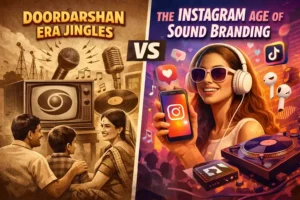
    Doordarshan Era Jingles vs the Instagram Age of Sound Branding

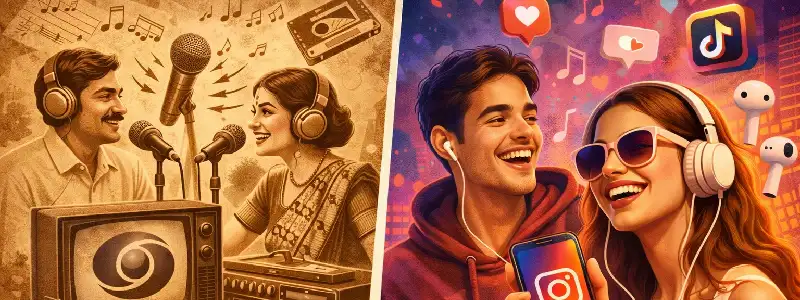
    There was a time when a brand’s sound did not try to impress anyone. It did not announce itself. It arrived through a television set that everyone in the room was already facing. There was nothing else competing for attention. No second screen. No scrolling thumb. Just sound entering a shared space and repeating itself until it stops feeling new.

    That is how many Indians first learned what sound branding actually does or how it works. Not through strategy decks or brand manuals, but through real, raw experience. We used to not just analyse but absorb these jingles and relate to them. Years later, the memory still lives somewhere unguarded. A few notes play in surround, and we recognise them even before thinking about that brand.

    That contrast becomes unavoidable today, when most brand sounds vanish almost as soon as they appear.

    This is not about nostalgia. It is about understanding what changed, and what quietly broke along the way.

    When Sound Was Built to Stay

    In the Doordarshan era, brands behaved as if time were available in abundance.

    They chose one sound and stayed with it. Not because it was perfect, but because consistency itself was the strategy. The sound did not evolve every quarter. It was not refreshed for novelty. It repeated, patiently, until familiarity replaced effort.

    This worked because human memory does not respond to cleverness. It responds to stability. What repeats without demanding attention gets stored. What stays the same becomes trustworthy. Those jingles were not memorable because they were dramatic. They were memorable because they were predictable.

    No dashboards were tracking the recall. No metrics validating long-term memory. Decisions were guided by observation. By instinct. By the understanding that repetition was not boring for the audience, only for the creator.

    Over time, the sound crossed an invisible threshold. It stopped feeling like advertising and started feeling like identity. The brand no longer needed explanation. The sound was enough.

    The Moment Sound Became Content

    That balance shifted when media stopped being shared and started being personalised.

    The Instagram age introduced a new listening environment. Sound is now encountered mid-scroll, half-muted, layered with other audio, often disposable by design. It has seconds to work, or it is replaced.

    In this environment, brands no longer assume time. They assume resistance.

    So sound adapts. It becomes shorter. Faster. Borrowed from whatever is already trending. The objective shifts from building brand recall to winning attention in the moment.

    This is not a lack of creativity. It is a response to pressure.

    But pressure changes behaviour.

    When sound is treated as content, it inherits content’s lifespan. It performs, peaks, and disappears. The mind does not invest in remembering it because experience has taught it not to.

    The result is visibility without memory. Plenty of reach. Very little recognition.

    sound branding

    Being Heard Is Not the Same as Being Remembered

    Modern branding measures what can be seen.

    Views. Plays. Engagement.

    Memory does not show up on dashboards. It appears later, in preference, trust, and familiarity. By then, it is difficult to trace.

    In the Doordarshan era, sound was designed for accumulation. Each repetition added weight. Over time, the sound carried meaning without explanation.

    Today, sound is designed for momentum. Momentum looks impressive. Memory looks quiet.

    Most brands choose momentum because it offers immediate proof.

    But momentum fades. Memory compounds.

    That difference defines what lasts.

    From Shared Culture to Fragmented Attention

    Earlier, sound existed inside a shared cultural rhythm. One jingle could speak to millions of homes at once. Listening conditions were similar. Context was common.

    Today, sound moves through fragmented spaces. Feeds are personalised. Audiences split into niches. What works in one context feels irrelevant in another. Consistency feels risky. Adaptation feels safer.

    So brands keep changing their sound, hoping relevance will replace recognition.

    Often, it does not.

    What emerges is abundance without ownership. Sound everywhere, but nothing that feels unmistakably tied to one brand. The brand jingle disappears before it can settle.

    What the Brain Still Responds To

    The past does not offer templates. It offers principles.

    The human brain has not changed its preferences. It still remembers what repeats. It still trusts what feels familiar. It still recognises what remains stable.

    A strong sound identity does not need to be loud. It needs to be consistent. It needs to belong to only one brand. When it plays, it should answer a simple question without effort.

    Who is this?

    Not what is trending. Not what is new.

    Designing Sound as Infrastructure

    Treating sound seriously requires restraint.

    It means resisting constant reinvention. It means repeating what works even when repetition feels uncomfortable internally. It means designing sound not as a campaign asset, but as infrastructure.

    This does not require long compositions or nostalgic callbacks. Sometimes it is a short cue. Sometimes a specific rhythm. Sometimes, a tone that stays unchanged even as visuals evolve.

    Formats can adapt. Identity should not.

    Brands that approach sonic branding this way rarely see instant spikes. What they see instead is familiarity growing quietly. The sound starts needing less explanation. It feels known. Expected. Trusted.

    Why Memory Is Still the Advantage

    Attention can be rented. Memory has to be earned. Platforms will change. Algorithms will shift. Formats will be replaced.

    But a sound that people recognise without effort continues to work wherever it appears. It carries meaning without demanding space. The Doordarshan era reminds us of something easy to overlook. Brands do not live on platforms. They live in people.

    The real decision for brands today is not whether sound matters. It is whether they are designing sound to pass by or to stay. That choice does not show results immediately. But over time, it determines what remains familiar and what quietly disappears.