
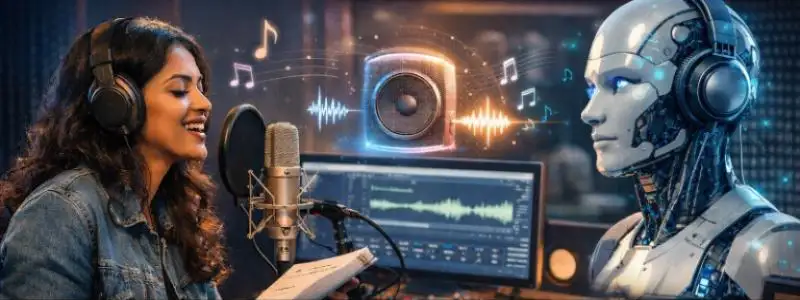
Brand jingles have not disappeared. They have become quieter, sharper, and more intentional. What changed is not the role of sound in branding, but the expectations placed on it. Decision-makers now ask harder questions about recall, flexibility, speed, and cultural fit. Jingles are no longer judged only by catchiness, but by how intelligently they are conceived and produced.
This shift has reshaped jingle production from a creative output into a strategic discipline.
When jingles stopped being “songs” and started becoming systems
For decades, a jingle was treated as a finished object. Write it once. Record it once. Push it everywhere. That logic worked when media channels were limited, and audience attention was slower.
Today, sound behaves differently. A brand’s audio identity has to stretch across platforms, formats, durations, and contexts. Fifteen seconds on a streaming ad. Three seconds inside an app. A sonic cue embedded in a product experience. The modern jingle is no longer a single piece of music. It is a modular system.
This is where sonic branding strategy quietly replaced the old jingle mindset.
The most effective brands are not asking, “Is this tune catchy?” They are asking whether the sound can adapt without losing recognition, whether it can be reshaped without losing emotional truth, and whether it still feels human even when scaled.
Why technology changed the process, not the taste
Much of the public conversation around AI in jingle production misses the real point. The technology did not redefine musical taste. People did that. Attention spans shortened. Content environments are fragmented. Brand voices became more conversational.
What technology actually changed was the production logic.
Sound teams can now test variations faster. Explore tonal directions without committing full studio resources. Adjust tempo, texture, or structure to fit specific placements. That efficiency is not creative on its own, but it creates space for better creative decisions.
The mistake some brands make is assuming speed equals quality. It does not. Speed only matters when guided by taste, intent, and restraint. Without those, faster production simply leads to louder noise.
The human layer that still decides everything
Despite advances in tools and workflows, jingles still succeed or fail on human judgment. Not algorithms. Not automation. Judgment.
Emotion does not respond to technical perfection. It responds to familiarity, surprise, and cultural alignment. That is why human and AI collaboration in music works only when roles are clearly understood.
Humans decide what a brand should feel like. Humans sense when a melody carries warmth or when it feels generic. Humans recognize cultural nuance that data alone cannot flag.
Technology supports those decisions. It does not replace them.
The brands that get this right treat modern jingle creation as an editorial process. Ideas are tested, refined, rejected, and rebuilt. Not because tools allow it, but because thinking demands it.
Customisation is no longer optional
Generic sound has become a liability. Audiences hear it instantly. They may not articulate why something feels off, but they feel it.
That is why custom brand jingles are regaining importance, even as production becomes more scalable.
Custom does not mean complex. It means intentional. A jingle built around a brand’s rhythm of speech. It’s emotional temperature. Its cultural context. A sound that belongs to one brand and feels wrong on any other.
This is especially critical in crowded markets, where visual differentiation is limited. Sound becomes the memory anchor. When done right, it bypasses conscious analysis and settles directly into recall.
Audio branding in a fragmented attention economy
Modern audiences do not “listen” the way they once did. Audio branding now competes with multitasking, scrolling, and constant interruption. This reality has reshaped audio branding in the AI era into something leaner and more precise.
Shorter does not mean weaker. Often it means clearer.
A successful jingle today may live as a motif rather than a melody. A tonal signature rather than a full composition. These fragments still carry identity, but they respect the listener’s environment.
Brands that understand this stop forcing sound into old formats. They design it to fit how people actually consume media now.
Where Digikore Studios fits into this evolution
This is where your approach matters.
At Digikore Studios, you are not treating jingle creation as a production task. You approach it as brand interpretation through sound. Your team looks at how a brand speaks, how it moves, and how it wants to be remembered before a single note is shaped.
Your strength lies in knowing when to explore variations and when to stop. When to use modern workflows to accelerate thinking and when to slow down and trust musical instinct. That balance is rare, and it shows in outcomes that feel intentional rather than over-produced.
What you bring to jingle production is not speed for its own sake, but clarity. Clarity of sound, of purpose, and of brand ownership.
Why smarter production leads to longer brand memory
The real advantage of modern workflows is not efficiency. It is longevity.
A well-designed jingle system can evolve with a brand without losing recognition. It can adapt across campaigns, markets, and formats while retaining its core identity. This reduces the need for constant reinvention and protects brand memory over time.
Smarter production also reduces creative fatigue. When sound is designed modularly, teams can refresh without restarting. That continuity matters more than novelty.
In a noisy world, consistency is not boring. It is comforting.
Final perspective
Jingles did not become obsolete. They became smarter.
The brands winning attention today are not louder or trendier. They are clearer. Their sound knows who it belongs to, where it fits, and when to step back. That clarity is the result of thoughtful jingle production, guided by human insight and supported by modern capability.
When sound is treated as a strategy rather than decoration, it stops chasing attention and starts earning memory.
Questions decision-makers are quietly asking
Does modern jingle production reduce creative quality?
Only when taste is removed from the process. Quality depends on judgment, not tools.
How do brands keep jingles from sounding generic today?
By grounding them in brand-specific emotion, rhythm, and context rather than trends.
Is a full-length jingle still necessary?
Not always. Many brands benefit more from flexible sonic cues than full compositions.
Can technology-driven workflows still feel human?
Yes, when humans control the creative direction and final decisions.
How long should a brand jingle last in memory?
Ideally, across years. Longevity comes from consistency, not repetition.
Is sonic branding relevant outside advertising?
Absolutely. It now extends into products, apps, and user experiences.